When Breip published his manifesto and unveiled the blueprints for Natural Chips, he did more than just give away technology. He laid the foundation for an entirely new economy and philosophy of creation – the "Blueprint Standard." This standard, embedded in the core of every Natural Chip, became the language through which all independent colonies communicated.
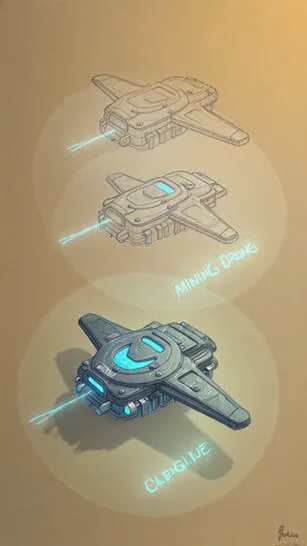
Its essence was simple yet brilliant: any owner of a Natural Chip could now not only use but also create their own blueprints – detailed digital instructions for assembling anything: from a simple mining rig to a complex combat drone, or even an entire multifaceted autonomous complex. Each blueprint contained not just the form, but also the "instructions for life" of the object: how it should acquire resources, where to fly, when to fire, how to regenerate or interact with other systems. It was a living code describing a physical entity.
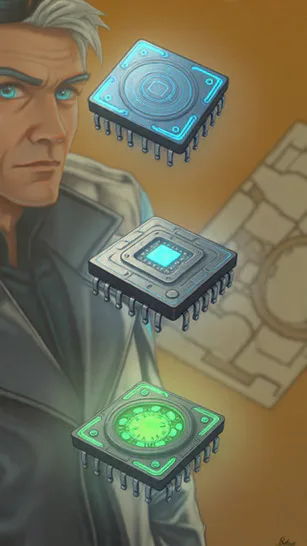
To build a physical object from a blueprint required more than just knowledge. It was necessary to "flash" the blueprint into a chip, creating a unique license. This process was akin to digital "printing": at the moment the license was created, a precise "snapshot" of the blueprint's current state was taken. This instantly fixed all the properties and instructions of the object, creating its specific version. If the blueprint owner later made changes to their original design (for example, improved the engine or added a new function), to produce an updated version of the object, they had to create a completely new license that reflected these changes. Thus, each flash, each creation of a license, generated a new, unique version of the object.
The owner of the original blueprint had complete freedom: they could endlessly modify their design, improve it, adapt it, and then release new versions, creating new licenses for each. License holders, however, were limited: they could only build and use objects of the specific version fixed in their license. They did not have the right to change the blueprint itself, only its physical manifestations.
This system created a dynamic market. Colonists could sell each other not only finished objects but also the blueprints themselves, transferring rights for their further modification and licensing. Or, far more commonly, they could sell licenses – the rights to create objects of a specific version. A talented engineer could develop an ideal blueprint for an autonomous miner, and then sell thousands of licenses for its assembly without revealing the blueprint itself.
Thus, thanks to Breip's vision, each colony transformed into a bustling hub of innovation, where the free exchange of ideas and a well-thought-out versioning system allowed the community to develop exponentially, challenging Sugen's monopoly on technology and knowledge.












0 comments