

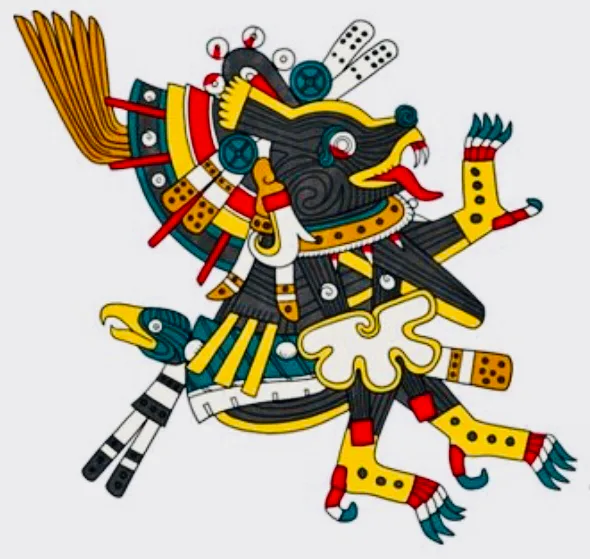
Xolotl is a significant deity in Aztec mythology, known as the dog-headed god of lightning, fire, death, twins, and misfortune, often depicted as a monstrous canine or skeleton, who guided the sun and the souls of the dead through the underworld (Mictlan). As the twin of the great god Quetzalcoatl, he played a crucial role in creation myths, helping retrieve bones from the underworld to create humanity. His mythological association with transformation and escape is reflected in the axolotl (water salamander) and the Mexican hairless dog (Xoloitzcuintli), both named after him.
Key Roles & Associations
God of Duality: Twin brother to Quetzalcoatl, representing the darker, earthly aspects of transformation, while Quetzalcoatl embodied creation and light.
Psychopomp: Guided the souls of the dead on their perilous journey through the underworld to the afterlife.
Guardian of the Sun: Accompanied the sun as it traveled through the underworld each night, protecting it from dangers.
Patron of Twins & Monsters: Linked to physical deformities and the unusual, often depicted with ragged ears or reversed feet.
Key Myths & Symbolism
Creation of Humanity: He and Quetzalcoatl journeyed to the underworld to retrieve bones from the previous world, using them to create the people of the current Fifth Sun.
Transformation: To escape sacrifice, Xolotl transformed into a maize plant, a maguey plant, and finally an axolotl, hiding in Lake Xochimilco.
The Axolotl: Named after him, this amphibian symbolizes his connection to transformation and the underworld, as it never fully leaves the water.
The Xoloitzcuintli: The Mexican Hairless Dog, also named for him, was believed to guide souls and was considered a sacred companion for the afterlife
. Depictions
Dog-headed man: Most common depiction, sometimes with skeletal features or reversed feet.
Monstrous figure: Sometimes portrayed as a skeleton or deformed being.
Wind Jewel: Often carries Quetzalcoatl's ehecailacacozcatl (wind jewel).






0 comments