
This article originally appeared on giorgiosotiro.tumblr.com.
What a wonderful failure this week was! I don’t know, yet, if it will be a successful one; that is something that would be revealed in the future; however, I am willing to put effort to. Successful would be if the lesson from it would be appropriately taken into consideration and consequently put into application, for the rest of life. Surely, even that lesson would be not perfect, but, until something better to come, it is the wisest way to follow it. Wonderful was, because of the lesson it provided; if everything were idealistic, then that needs to raise awareness if some hypnotic rhythm of staleness has captured the progress. But, what am I talking about?
First, let me cite the following:
Be obsessed with work
Show me a genius and I’ll show you a workaholic. Van Gogh produced 2000 works of art between 1880 and 1890 (1100 paintings and 900 sketches). That’s 4 works of art a week for a decade, and he didn’t start making art until his mid twenties. DaVinci’s famous journals represent decades of note taking, doodling and observations, and it’s a good guess that work was the center of his life: no spouses or children are mentioned in any of our records of him (though he likely had lovers in his studio). Picasso made over 12,000 works of art (“Give me a museum and I’ll fill it he said, and he was right) in his lifetime, including sculptures, paintings and other mediums. Shakespeare wrote more than 40 plays, not to mention dozens of sonnets, poems and of course, grocery lists. These are people who practiced their crafts daily and sacrificed many other ordinary pleasures in life to make their work possible. Every math or music prodigy practiced to produce the work they are famous for (See the ten year rule).
And of course very few of these works are considered masterpieces, by their creators or anyone else. Sure, today, any coffee stained sketch by Picasso or Van Gogh garners millions, but that has more to do with the signature that’s on the painting, than the quality of the painting itself. No matter the field, the productive have more failures to show than successes by ratios of 10 or more to 1. Hemingway is noted for his belief that writing is rewriting, and that dozens, or hundreds, of attempts are required to write anything well (“The first draft of anything is shit“). [[I believe the second could be shit, too, but potentially a more polished one than the first.]] Most painters, from Dali to Turner made sketches and studies to experiment and explore before committing themselves to the final versions of the amazing works we see in museums.
Whatever their talents or genetic gifts, most everyone who earned the label genius was dedicated to their work: the list of lazy geniuses is short. Certainly there are burnouts, suicides, and those who spent unproductive years in retreat (or rehab), but none could be called petrified of work. The debate over talent vs. work ethic is moot in history: without the work, we’d never heard of most of these people.
(Source: #57 – How to be a genius. Text in “[[]]” and highlights are mine.)
And again:
“Genius is one percent inspiration, ninety-nine percent perspiration.” - Thomas Edison
“Success is a journey, not a destination. The doing is often more important than the outcome.” - Arthur Ash
“Every strike brings me closer to the next home run.” - Babe Ruth
“I hear and I forget. I see and I remember. I do and I understand.” - Confucius
“Tell the world what you intent to do, but fist show it. Deeds, and not words, are what count most.” - Napoleon Hill
“Faith Without Works Is Dead” - James 2:16 (Bible)
And so on.
Furthermore, don’t forget the trio of “Start Doing!” (I mentioned in my previous post):
Meanwhile, another example of doing and the consequent benefits of experience: What I learned from making 12 games in a year.
Now then, what am I talking about? Well, that 2nd week, it shouldn’t reality be called Game A Week, but Game A 8-hours… What happened? Let’s start: fear of failure, lack of self-discipline, laziness, not-gratification-delay, indecision, et cetera. The common causes (and possibly even more) of non productiveness. That way, you don’t live, you just survive. Like I animals do; without purpose and action based on plans/goals. So what? Decision. This is the grandiose tool. It is subtle and powerful, that determines your life. It is in your hands. No excuses. It is not …magical. In that situation, elaborate effort must be applied to yield results. But the effort is the important factor. Results and outcomes are not in your control. Neither your past, nor your future. The present moment is where you actually live, and it is absolutely in your control what you do in every moment. Be alert; focus your concentration on the here and on the now; apply your morals/ideals; control your thoughts, emotions, intentions and actions; assess your beliefs.
Let’s see the following. What a fantastic inspiration that is, for both youngsters and older people. Really, look at this:
This 98-Year-Old Man Spent 13 Years Creating Remarkable Art in MS Paint
You have to read the following (which, too, it is being mentioned in my previous post):
6 Harsh Truths That Will Make You a Better Person
Keys: Do. Start doing. Work. Keep moving. Gain experience. Grow. Take valuable use of every moment. Be better, every day. Failures are the stepping stones that lead to success.
Now, finally, let’s talk about the game I made in my 2nd week (…or I will say, in those last 8 hours of that week…).
MiseEnScène
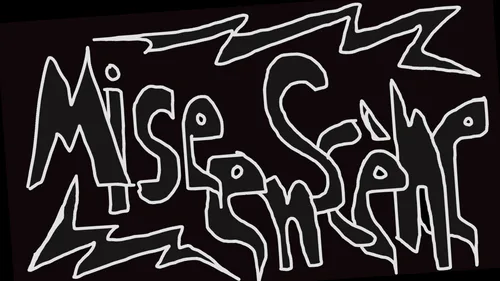
While watching this interview by Yu Suzuki, I spotted a concept on the words spoken there, called Mise En Scène. As I understand at fist glance, it has something to do with cinematography, so I started to investigate a bit that concept. To take a grasp of it, I read the relevant article in Wikepedia: Mise en scène. I immediately got interested in it. As that article described it, the concept of raw scenes accompanied by stark lighting and jagged architecture, it magnetized me and the idea of making a video game based on that, started to woven in my mind.
Throughout the week, I had in mind the style I wanted to depict in the screen. The movie The Cabinet of Dr. Caligari, sparkled my imagination of how I could design all the scenes in the game, also how the events would flow and the relevant interaction the player would experience:
I wrote a story (a short one, because of my limited time) as follows:
*Locked in a basement, an inventor is working on a machine which could read the hidden desires of people.*
In a moment of happiness and joy, from the accomplishment, the inventor goes out of his basement, which he had years to left, and with enthusiasm starts to test that machine on everyone he could meet.*
His machine shows every hidden desire of others, and it is a very interesting decision and entertaining.*
In one situation, he reads with his machine the hidden desire of a small child, one that is begging and is poor and hungry, that child he would want to have a loaf of bread, so as to sate, their self and the their mother who is at home alone.*
Touched by that situation, the inventor buys a loaf of bread from a seller and he gives it to the child. Surprised, the child grabs the loaf, thanks the inventor and leaves in haste.*
The inventor is keep trying his machine, when he passed near a man who, after a while, leaves. The machine detected the hidden desire: Death. That man disappears into a dark place. What exactly does that mean?*
The major of the city had a speech to make in front of the citizens and it seems that man with the desire “Death” is invited by the major to the speech.*
The inventor draws very near to the major and the invitee, being aware that something bad is going to happen.*
Suddenly, the invitee pulls out a gun. Which one the inventor must protect? Is it about murder or suicide? The inventor must trust his intuition.*
In the end of the story, I wanted to give a suspenseful and of action part, where the player must take an important decision. As it is now, the end is somehow a dark one.
But, in reality, the story didn’t end up that way. In the final product the end of the story could be interpreted as the player wants; it projects something mysterious. The player in the end could ask: What really happened? And be either confused or trying to speculate. Again, the content of the story end that way, because of the limited time.
I learned a lot of interesting things during the development. How to apply transitions between the scenes. How, in those transitions, the text could appear revealing the words or the thoughts of the characters, and then get back to the scene. How events could take flow in the game. The interaction with the characters and the objects and the consequent results on screen. The atmosphere that it could be created; like, the colours, the shapes, the animations et cetera, that could be applied and be projected toward the player.
Obviously, the design is one of a rush. Rushed animations, rushed designs, rushed texts, everything rushed, and not polished. I wanted to create characters with a lot of expressions in their faces, like how in the above movie the actors have. I don’t have yet the experience to design them fast or even very accurately in a reasonable time.
Also, I wanted to create a lot of characters, each one of them to had their own hidden desires, and a lot of them to had their own stories, based on them. This is what pains me the most that I couldn’t accomplish (because of the lack of time). I wanted to give a lot of interaction through unique personalities. But, pain is good; it makes you stronger and more mature for the next time, if you take advantage of its benefits and lessons.
The text that appears on screen, I wanted to continuously randomly shaken it a bit and also in the background to add some random generated shapes, with random colours assigned to them. Lack of time didn’t allow that, too.
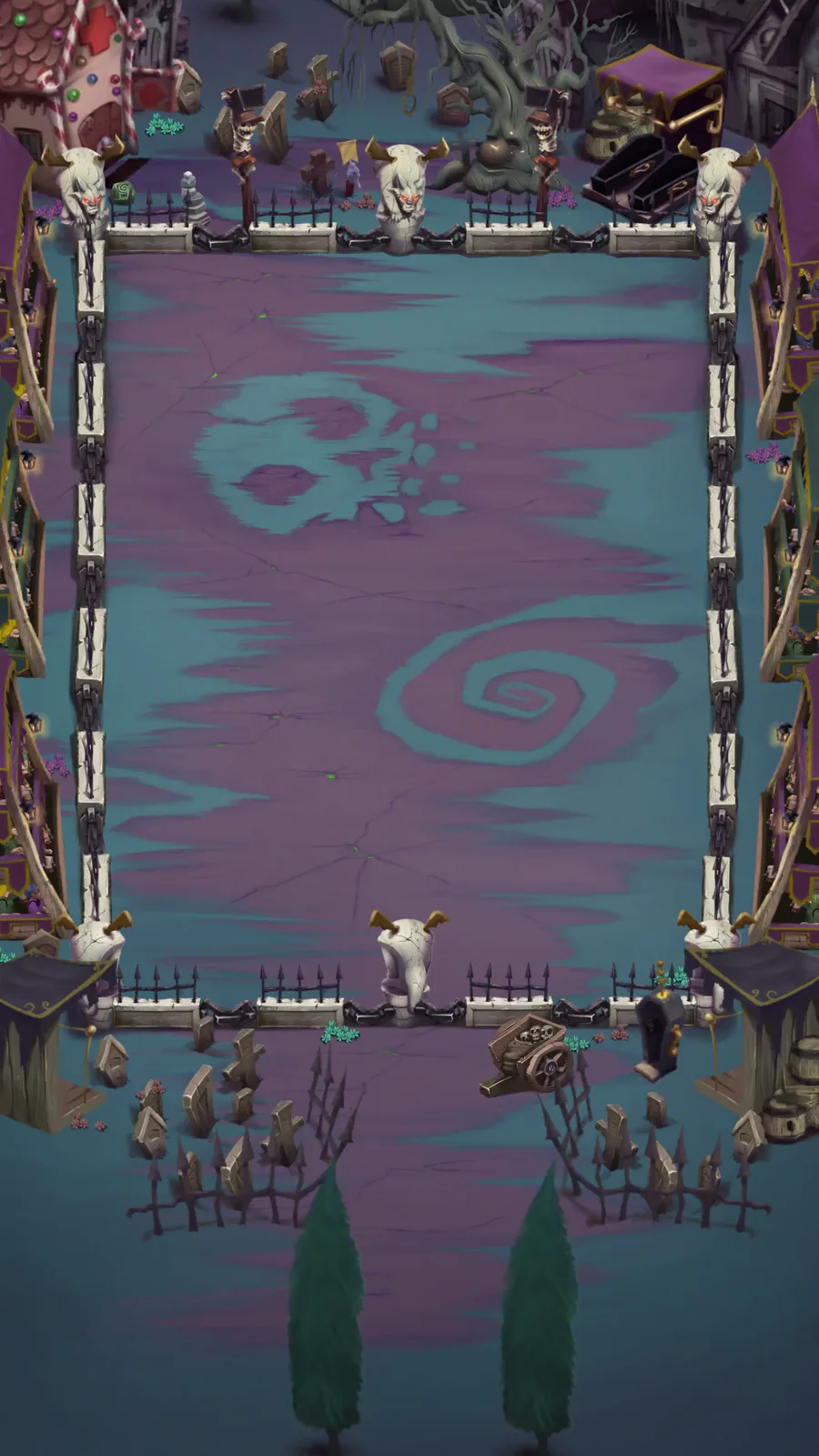
The scene of the Act II, I wanted it to be more joyful, with a lot of decorations, like houses, trees and everything that could give motion and life on screen. Now it is just an empty void place, with the only necessary characters and one object to interact.
Even if not written in this post, I believe the many and all benefits of that whole endeavour and the last part of it, have been captured by my subconscious mind. That is, experience. This is the most important fruit to gain by your labour. And wisdom, to use your resources and take decisions with a better attitude and in a better way.
In this post, I decided not to categorize like “idea”, “what went right”, “what went wrong”, “conclusion”, but to the let the flow of thoughts and information come out naturally for me and spontaneously, in a real time manner.
Thank you for spending the time to read this post and I hope you found it in a way or two useful and for yourself. If you want to spot even more failures I didn’t capture, then please let me know of them, so as to acknowledged them, take the lessons, gain experience, and keep moving on to greater morally wise extends.
You can find me on Twitter: @bigdipperart.














0 comments