
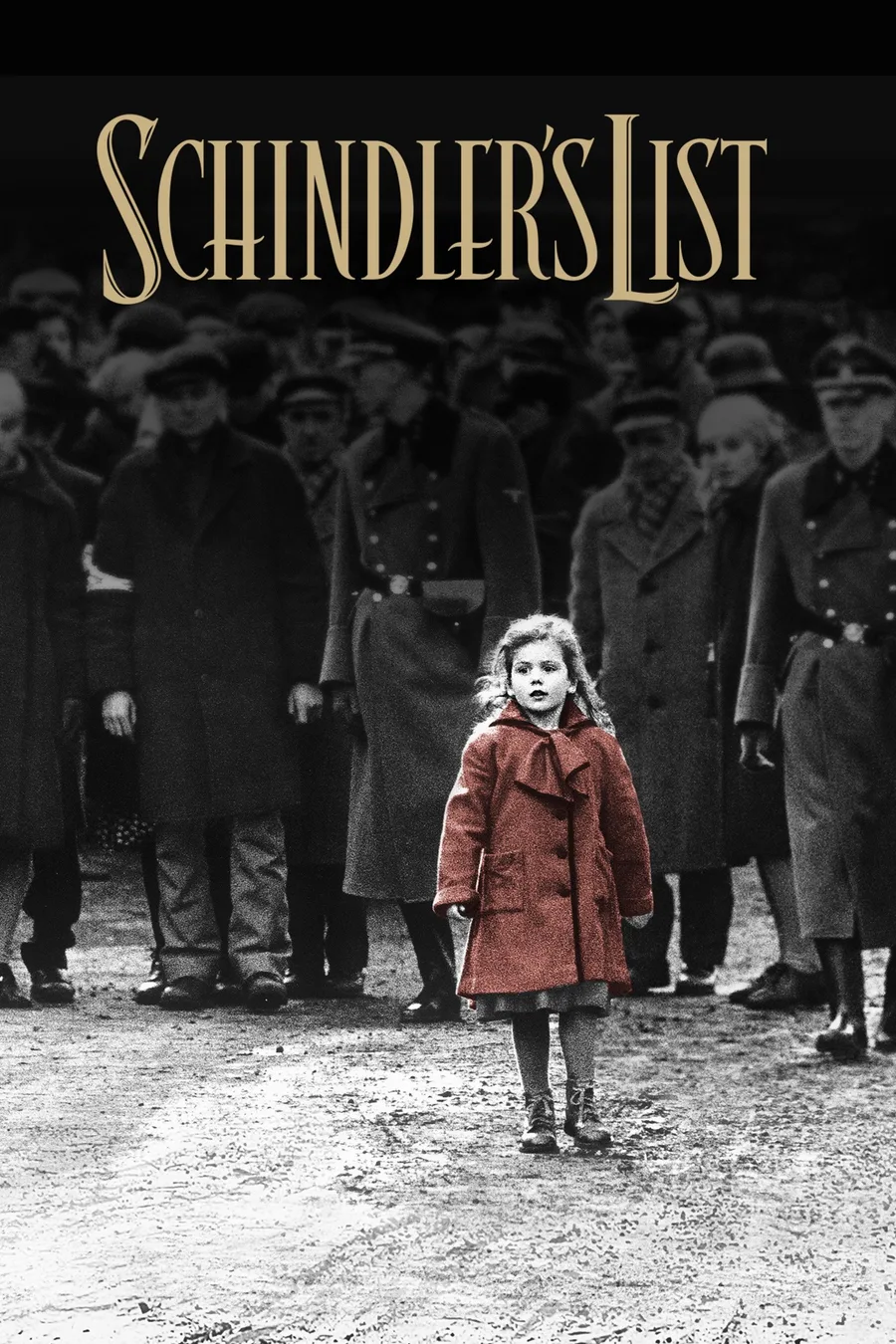
My Rating: 10/10
There are films that entertain, films that impress, and then there are films that feel essential. For me, Schindler’s List falls into that last category. This is not just a movie I watched, it’s one I experienced. It’s one that sits heavy on your chest long after it ends.
I don’t even really like calling it “great” in the traditional sense, because that word feels too casual for what it represents. This film carries weight. Historical weight. Emotional weight. Moral weight.
Stephen Spielberg approached this with a level of restraint and maturity that I deeply respect. The decision to shoot primarily in black and white was not just stylistic, it makes the film feel archival, almost documentary-like. It strips away distraction. It forces you to sit with what you’re seeing. And when color does appear, it’s devastatingly intentional. That contrast isn’t flashy; it’s purposeful. It reinforces innocence, loss, and memory in a way that feels haunting rather than manipulative.
Liam Nesson as Oskar Schindler is phenomenal. What I appreciate most about his performance is that he doesn’t portray Schindler as a saint from the beginning. He starts as opportunistic, charming, morally flexible, a businessman looking to profit from war. And that gradual transformation is what makes the story powerful. You see the shift. You see the realization forming behind his eyes. By the end, when he breaks down over the lives he couldn’t save, it doesn’t feel theatrical. It feels earned. It feels human.
Ralph Fiennes as Amon Göth is terrifying in a way that feels disturbingly real. There’s no cartoon villain energy here. He plays cruelty with casual normalcy, which makes it infinitely more disturbing. The banality of evil is on full display. The way he can commit horrific acts and then behave as though nothing happened is what unsettled me the most. It’s not exaggerated rage, it’s normalized brutality.
And then there’s Ben Kingsley, who brings such quiet strength and intelligence to Itzhak Stern. His performance feels grounded and steady, a moral anchor within chaos.
What strikes me most about this film is that it doesn’t rely on spectacle. The horror isn’t dramatized for shock value. It’s presented with stark honesty. The violence is not stylized. It’s abrupt. It’s cruel. It’s matter-of-fact. And that’s what makes it hit harder. There’s no triumphant score swelling over heroics. There’s silence. There’s tension. There’s grief.
The pacing is deliberate. At over three hours, it’s not short, but it never feels indulgent to me. The length allows you to understand scale, not just numbers, but lives. Families. Faces. Moments of fear. Moments of brief humanity in the middle of inhumanity.
The ending absolutely devastates me every time. The scene where Schindler realizes he could have saved more people is one of the most emotionally raw sequences I’ve ever seen. It reframes the entire story, even after doing something extraordinary, he sees only what he failed to do. That kind of moral reckoning is powerful.
If I were forced to critique something, I’d say that because of its heavy subject matter, it’s not a film I can revisit casually. It demands emotional energy. But that’s not a flaw, that’s a testament to its impact.
For me, this is a 10 out of 10. Not because it’s “perfect” in a technical vacuum, but because of what it accomplishes. It educates without preaching. It humanizes without romanticizing. It honors victims without exploiting their suffering.
This isn’t just cinema. It’s remembrance. And I believe films like this matter beyond entertainment.




0 comments