
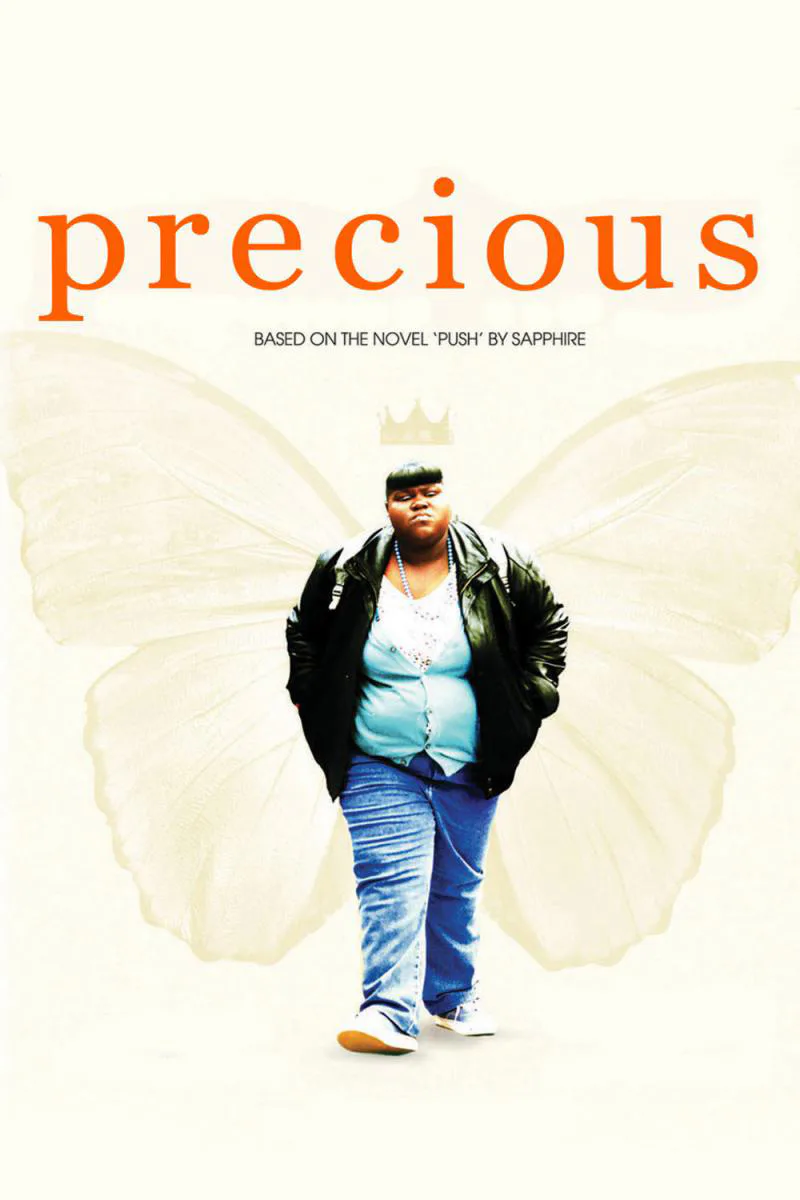
I’d give Precious ( 2006 ), a very strong 9 out of 10.
This is one of those films that is difficult to evaluate purely on enjoyment because that is not what it is trying to provide. It is not entertaining in a conventional sense. It is heavy, confrontational, and emotionally draining. But from a craft perspective, from a performance perspective, and from a thematic standpoint, it is executed with an impressive level of control and intention.
Gabourey Sidibe’s performance is extraordinary, especially considering it was her debut. What stands out most is how internal her acting is. She does not overplay the trauma. She often barely reacts outwardly. Instead, you watch the character absorb everything. The silence becomes expressive. The way she lowers her eyes, the hesitation before she speaks, the stiffness in her posture, those details communicate more than dialogue ever could. It feels lived in rather than performed.
The fantasy sequences are also handled with surprising care. When Precious imagines herself as glamorous, adored, or physically transformed, the film does not mock her. It does not treat those moments as delusion. They function as psychological refuge. From a storytelling perspective, that is a smart structural decision. It gives the audience access to her internal world without turning it into narration. It also reinforces how powerful imagination can be as a survival tool.
Mo’Nique’s performance is honestly devastating. It would have been very easy for that character to become one dimensional. The script gives her cruelty that is extreme and deeply uncomfortable. But the performance layers insecurity and bitterness underneath it. When the final confrontation happens in the social services office, you can see the generational damage spilling out. It does not excuse her behavior. It contextualizes it. That distinction matters. It prevents the film from becoming simplistic or moralistic.
Director Lee Daniel’s keeps the visual language grounded. The camera stays close. The apartment feels suffocating. The lighting is flat and sometimes harsh, which reinforces the lack of escape in Precious’s daily life. When she is in school, the space opens up slightly. There is more light, more room to breathe. That visual contrast is subtle but effective.
The classroom scenes deserve credit. Paula Patton’s portrayal of Ms. Rain could have fallen into a familiar inspirational teacher stereotype. Instead, the character feels firm and realistic. She is compassionate but does not romanticize Precious’s situation. She pushes her to read. She expects effort. That makes the progress feel earned rather than rescued. Literacy becomes the film’s quiet thesis. Education is not portrayed as magical salvation. It is portrayed as slow, disciplined empowerment.
Now, speaking honestly about the flaws.
The film is relentless. There is very little tonal relief. Abuse, poverty, illiteracy, isolation, sexual violence, generational trauma, it all accumulates. At times, the sheer weight of suffering borders on overwhelming. Some viewers may feel emotionally battered rather than reflective by the end. It walks a very fine line between confronting trauma and stacking it.
There are also moments where the pacing slows in the middle act. The incremental reading progress is realistic, but dramatically subdued compared to the explosive emotional beats at the beginning and end. That shift can feel uneven if you are expecting constant intensity.
But here is the important thing. The film never feels exploitative. It does not sensationalize the abuse for shock value. It does not use suffering as spectacle. The camera does not linger in a voyeuristic way. It stays observational. That restraint is what elevates it.
The ending is especially strong because it avoids false catharsis. There is no triumphant transformation montage. There is no neat resolution. Precious is still struggling. She is still carrying enormous responsibility. But she is reading. She is writing. She is making decisions. That grounded sense of forward motion feels authentic.
From a professional standpoint, the film succeeds because it understands tone. It commits fully to its emotional reality. It trusts its performances. It does not over score scenes to manipulate feeling. It lets silence do a lot of the work.
It is not a film I would casually revisit. It demands emotional energy. But as a piece of cinema, it is disciplined, performance driven, and thematically clear. It respects its protagonist. It humanizes someone society often ignores. And it does so without softening the reality.
That is why it lands at a 9 for me. It is not flawless. It is exhausting. But it is honest, and it is powerful.







0 comments