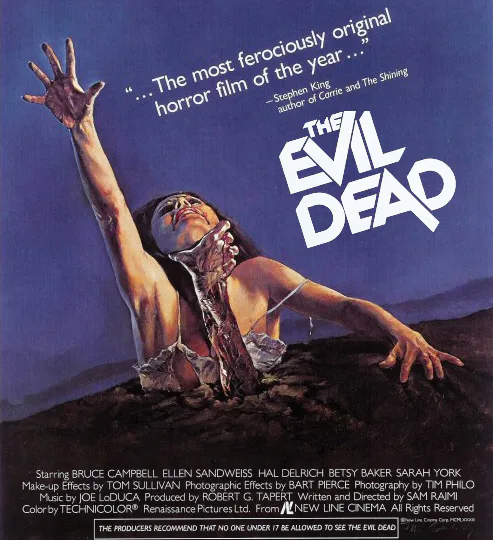
I’d honestly land at about an 8.5 out of 10 for The Evil Dead, and the reason it’s not a clean 9 or 10 isn’t because it lacks impact but because you can absolutely feel the budget constraints, the inexperience in some of the performances, and the rough edges in pacing, yet at the same time those exact “flaws” are weirdly inseparable from what makes the movie hit as hard as it does.
Because this isn’t a polished studio horror film that’s trying to carefully guide you through structured tension beats, this is a feral, almost experimental-feeling nightmare where the camera lunges at characters like it’s hunting them and the forest feels less like a backdrop and more like a living organism waiting to swallow everything whole, and when you think about what Sam Raimi pulled off with almost no money, relying on DIY rigs, practical effects, and pure creative stubbornness, it becomes less about technical perfection and more about raw cinematic adrenaline.
Because there’s this constant sense that the movie might spin out of control at any second, and instead of tightening it up, Raimi leans into that chaos, letting scenes escalate past what feels comfortable so the horror becomes exhausting in a good way, like you’re trapped in the cabin with them and there’s no tonal relief, no safety net, just relentless possession, paranoia, and deterioration; and watching Bruce Campbell as Ash before he fully morphs into the wisecracking horror legend of the sequels is honestly fascinating because he feels smaller here, more overwhelmed, almost fragile, and that vulnerability makes the violence and psychological breakdown land harder since he isn’t yet the confident chainsaw-wielding antihero people associate with the franchise.
he’s just a guy watching his friends become something inhuman, trying to rationalize the irrational until rational thought collapses completely, and even when the dialogue occasionally feels stiff or overly theatrical, the intensity of the performances keeps it from ever feeling lazy, because everyone seems committed to selling the descent into madness no matter how extreme it gets; and then there’s the gore, which today might look exaggerated or dated, but in context it’s shockingly aggressive, sticky, messy, and tactile in a way CGI rarely captures, because you can almost feel the weight of it, the thickness of the blood, the physical strain of the effects on the actors, and that physicality adds this grim realism to an otherwise supernatural story, which makes the demonic presence feel invasive rather than abstract.
plus the sound design, the low droning, the disembodied voices, the wind tearing through the trees, it all blends into this suffocating atmosphere that doesn’t rely on jump scares as much as it relies on escalation, and by the final act the movie isn’t just trying to scare you, it’s trying to overwhelm you, like it wants to grind your nerves down until there’s nothing left but dread, and that commitment to intensity is something a lot of horror films flirt with but rarely sustain, so even though you can critique its rough acting beats or uneven pacing, it’s hard not to respect how fearless it is, how much it feels like a group of filmmakers pushing beyond their limits because they genuinely believed in the horror they were crafting, and that authenticity, that slightly unhinged ambition, is why decades later people still talk about it as a foundational piece of modern horror instead of just another low-budget cabin-in-the-woods movie that came and went.




0 comments