
Game
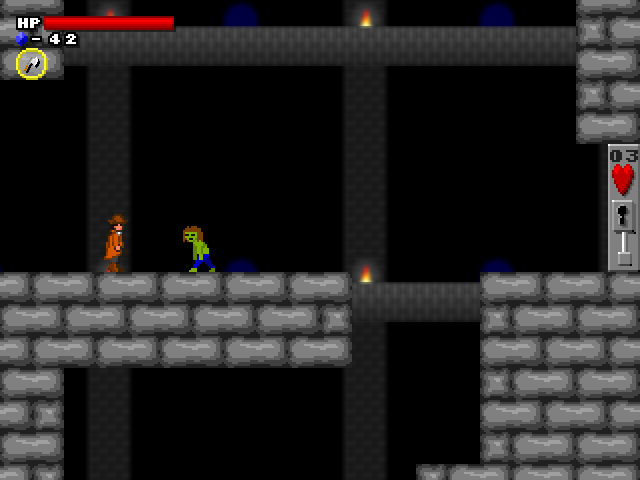
Belgrad: Curse of the Castle
10 years ago

Almost there...


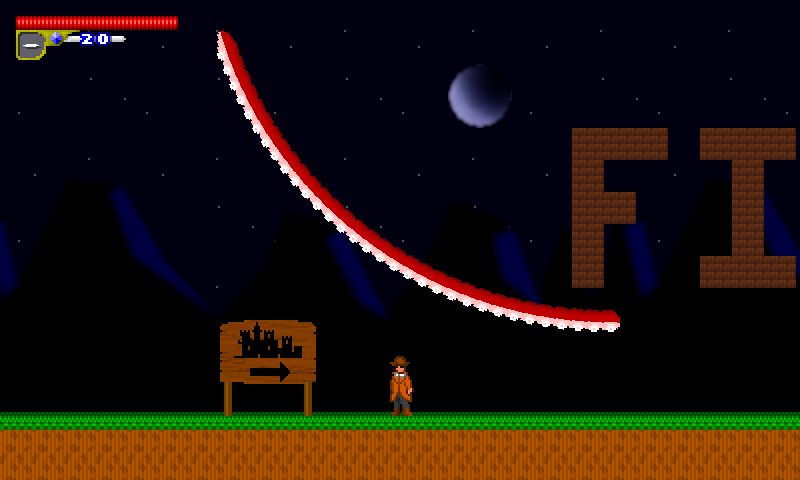
Belgrad: Curse of the Castle is almost done. The cinematics are in place. Controller support is taken into account for the control explanations. Certain secrets are taken care of.
…but now, I need original music.
(ahem) I said, I need music.

…okay, then. That’s pretty much what I’m working on now. I still would appreciate help, though.


0 comments

Loading...

Next up

Testing out a tentacle...

Okay, so I'm doing something either crafty or questionable: drawing the objects with Draw GUI.

It works, doesn't it?

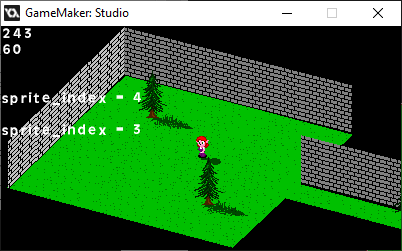
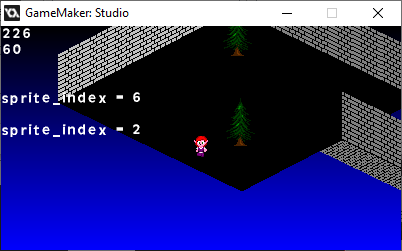
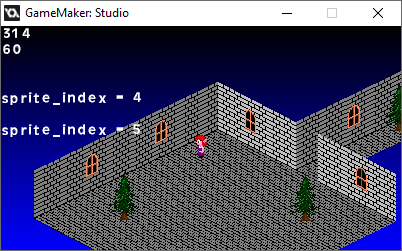
It took a while, but I got rotating flat sprites going.

Technically, it's a polygon, but it works.

If I were to do sprite-stacking, I have a basis, but my primary use for this is rotating attack animations.

Here. Just to give you an idea as to what I'm going for.

The character and GFX are temporary, but they help me realize what I want to do with the engine.

The floor's movement, being a view drawn onto a surface, is still one frame behind.

However, I figured it's more efficient to draw walls separately than to use blocks for indoor segments. They can stretch and keep doing the depth math accurately.

...huh.

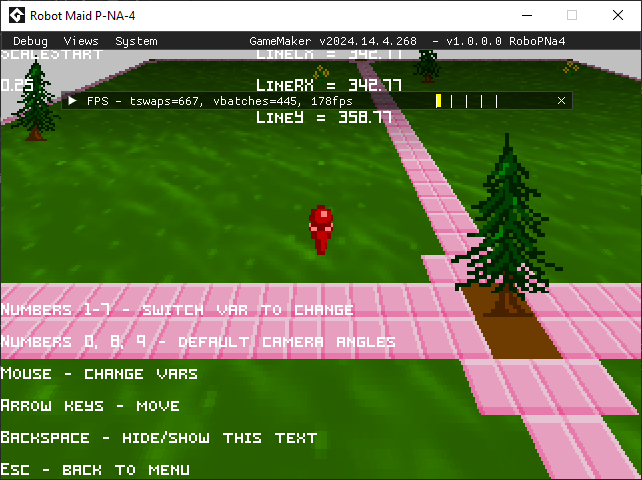
Didn't realize that debug mode was different on that version of Game Maker. Also shows WAY too much for players to use.

You can also click and drag some of those elements.

Dang it. I got the math right.

The real trick now is to optimize it. It's easier to do since it's technically all 2D.

The character and movement tests are going well, but...

OH. THAT's what Draw GUI does. It's not crunchy.

Then again, I thought that drawing a view to a surface would work the way I expected, but it ain't.

On one hand, I'm getting there. On another hand, "No, I'm not."

Then again, I probably forgot something important about layering the old-fashioned way, and something about using a view as a texture.

Part one of my zany scheme for a new project worked.

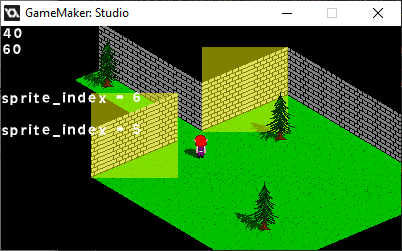
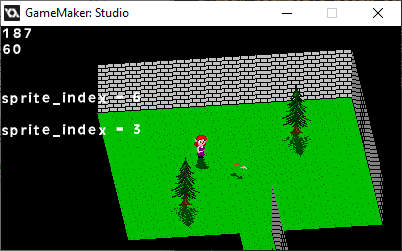
Using two Views, I can draw one squished, rotatable View as a texture, meaning I can use tiles for an isometric perspective.

Now, the tricky part is where everything looks like a pop-up book.