
One big problem with Magic Shepherd was how difficult it is to learn the game. When I published it for Ludum Dare, I also created an 8-page guide that explained the controls and explained the concepts. Unfortunately, despite this, people still had a hard time understanding the game. I want to make LFP more approachable with a good tutorial built into it.
Resources for Making Tutorials
While poking around the internet for how to make a good tutorial, I saw a lot of hate for walls of text. An 8-page guide is like several screens filled with walls of text, so this is obviously a bad way to teach the game. I need to come up with something better for LFP.
I found a few case studies (here and here) where developers explained how tutorials can be integrated into a level's design, but these are for platformer games and not weirder puzzle games.
When it comes to teaching weird or novel mechanics, a lot of people seem to love Portal. This video explained how Portal introduced their portal mechanic first through observation, then by giving the player a limited version of the mechanic by giving them a single-portal gun, then later giving them the full-mechanic with a dual-portal gun.
Additionally, I found this 2016 GDC talk filled with helpful advice.
Applying Lessons to LFP
Taking inspiration from Portal giving you a limited portal gun at the start, the first few levels of LFP will have limited possible actions by having no insert options. This is a way of limiting the actions the player can do and hopefully make them feel less overwhelmed from information overload.
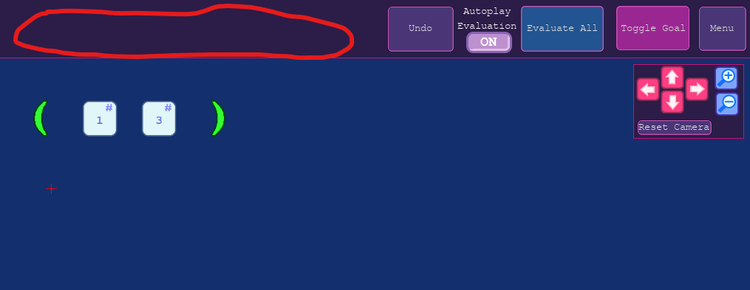
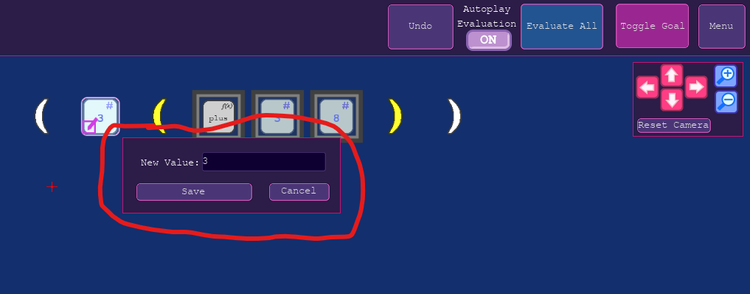
After a few levels of moving tokens, players should feel comfortable with that mechanic until they reach a level requiring them to edit a token value.
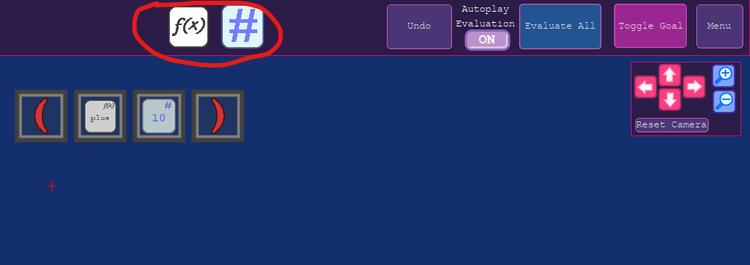
Once players are comfortable moving tokens and editing their values, then more options will appear on the top of the screen for player to add their own tokens.
This process would continue, introducing new concepts and working up to more complicated concepts like using and defining variables, higher order functions, and lambdas.
While learning how to edit and move tokens isn’t the overall purpose of the game, a player needs to learn these first before moving on to more interesting and useful things.















0 comments