
Museums of Local Pasts
I might have one of those undead apocalypse fantasies; not quite the type that drives folk to horde zombie survival kits or map out the safest places in town. But I can carry party conversations on zombie contingency plans and have read a bit about zombie bunkers/zombie proof houses. Admittedly, I wouldn’t last very long if the living-dead scenario was to occur. The reason I buy into the zombie dream is for the abandoned spaces. I’d be outside the safe zones, admiring empty houses and buildings. Piecing together narratives and navigating ruins.
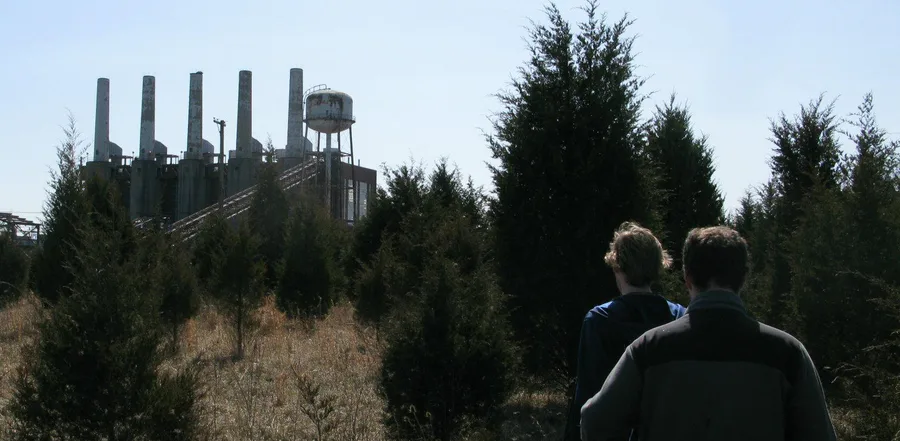
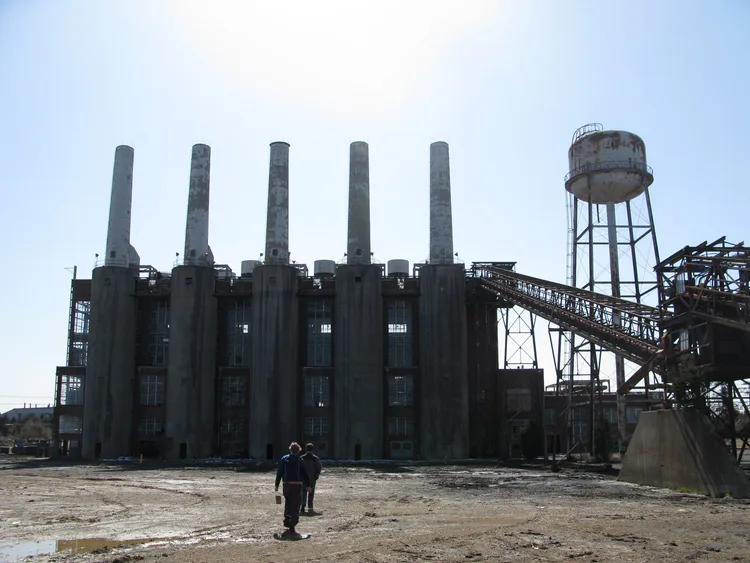
There’s a charm to decaying structures; an ominous peace seldom found elsewhere outside these corrode spaces. It hosts a respectful atmosphere too, almost akin to experiencing a museum or an interactive theater piece; Sleep No More without the actors. The visitors before us left these places untouched for future guests, so we do the same. Take only photographs, leave only footprints. Strangely, my passion for urban exploring grew into reality from videogames, originally finding its digital roots in the Halo franchise.
Reforming a FPS into Peaceful Spelunky
Back when Halo 2 was new, my brother, a few friends, and I were well invested in it. Veterans of Halo 1, we hit the Halo 2 newly added multiplayer in a storm; quickly dominating most matches we entered. We were organized, preferring to play in the same physical room than separated over Xbox live. We became a well-oiled mountain-dew-slurping machine, predicting each other’s moves as we navigated war-torn maps more familiar to us than daylight (we’re better than that now I swear). Yet, there came a point when we grew tired of this routine. Sure rising through those online ranks has its charm, but the structured matchmaking lost its pizazz. Nevertheless, our obsession with Halo 2 was too strong for us to simply quit, so, instead, we altered how we played it.
We started joining player-created custom Halo matches, the kind that used self-imposed modified rules. Sometimes the host dictated that only pistols were allowed or perhaps that we could only melee each other. The most extreme example was a player imposed game type named Zombies. As fun as it was, these Zombie matches collapsed easily as unwilling participants could just not play along, breaking the magic circle. This issue would eventually be overcome in Halo 3, when Bungie would add Zombies as a built in multiplayer type and rename it Infection. Yet, back in Halo 2, while it was self-imposed, we grew tired of it as well and moved on.
By this time, we were familiar with Halo 2 well enough to know of its bugs: issues with weapons that would launch you farther than normal in-game travel, or glitches in terrain that would allow you behind the scenes. We began sneaking out of levels using grenades to boost our jumps and sword flying across massive gaps.
Occasionally we encountered Easter eggs hidden by the developers, but we didn’t want that; the Easter eggs made the space too authored and cognizant of our presence; like exploring a sunken ship only to discover a sign with “Welcome diver, I hope you enjoy the wreck!” on it. We were effectively urban exploring within a game space, trekking across territory that the developers either scrapped or didn’t even know of.
These Spaces Cannot be Intentionally Crafted
Here is the conundrum: these spaces can’t be purposeful. They can’t be frequented by general players and they can’t bring depth to the game’s intended story. When exploring these arenas, you effectively create a magic circle within the game. For us, these were our own self-set exploration tasks within the Halo 2 game system; our weapons were means of travel and problem solving, no longer used to slay enemies. Because intentional game spaces cannot decay in the same way as abandoned buildings; the equivalent museum-of-local-past in games are these back-end scenes and incomplete levels. The development team quite literally cannot purposefully design these spaces for the player to see, because the charm lies in discovering the unintentional: wandering around half developed levels or breaking free from the playable ones.
Speedrunners can occasionally purpose these back-end scenes while racing to the finish, making them useful; and developers become aware of bugs, patching them. But that happens to real abandoned places as well: cities tearing down docile structures; artists using vacant walls as canvases. There is most definitely a temporal aspect to this sort of exploration, both in games and in reality; you have to be there at the right time to see it and capture the moment. It makes these locations even more unique and rare.
A Few Game Examples
While Mojang was aware of the Far Lands, they did not make any changes to affect them, leaving it as an artifact of the code. The Far Lands were the edge of the world in versions of MineCraft pre Beta 1.8. They featured bizarre geography and could cause lag or crash the game.
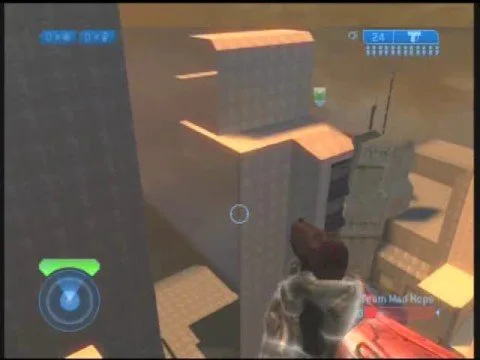
Halo 2’s Multiplayer level Headlong
Headlong was a very popular level to break out of because of the variety, and height, of buildings. While super-jumping was required, a variety of techniques were required to escape the map.
Pokemon Red, Blue, Yellow Glitch City
In the original Pokemon games, if the player completed a number of tasks in a specific order, they could enter a city with mismatched tiles, named Glitch City by players. If you visited this place without the proper means of escape, you could become permanently stuck here.
Elder Scrolls: Oblivion Pain Brush Glitch
In Oblivion, there is a glitch that allows paintbrushes to float and be stood on (or at least within the Xbox version). If you collected enough of these, and if your agility was good enough that you could jump high enough and far enough, you could create a system of paint brush platforms to get over the walls of cities. As the game uses doorways for loading new areas of the game world, this effectively would put you into unloaded spaces.









4 comments