
Oh, hello, welcome to the game jam. I see you have a lot of game ideas on you; please, feel free to leave those by the door. Or if you’d like, I can store them in the closet for the duration of the jam. Just please don’t wear that year-long game design idea in here, it might make people uncomfortable.
The Advantages of Teaming Up
In a typical game jam, you have to create a game within a confined period of time: an hour, a day, a weekend, a week, or sometimes even a month. There is also a theme; you may know this theme a while before the jam starts, or perhaps the theme is revealed as the jam begins. Some jams also have other constraints, slowly leaked out as the jam continues, or perhaps optional challenges for the daring to incorporate into their games. All in all, this may seem like a tall order: how could anyone possibly fit their magnum opus into a game jam? Quite frankly, you shouldn’t. Also, you can’t. But don’t worry, this is good.
Game jams are opportunities to try new things with little investment. They’re prompts to be creative and go outside your development comfort zones. I always try to incorporate a new piece of code, a new art style, or test a new design idea in every jam game. It’s a nice learning experience.
Moreso, and for many of the same reasons, game jams are the perfect atmosphere for collaboration. For starters, you have a defined amount of time together: the game jam length. If you and your collaboration partner don’t mesh well, you only spent a weekend or so figuring that out. That shouldn’t be enough time for hostility and resentment to rot away at friendship.
Collaboration also gives you an opportunity to take on new roles and learn how to communicate. If you’re used to programming, try a hand at art or music. If you fancy yourself an artist, why not grow your skills for coding? Changing things up in a jam can provide perspective on your normal role in game creation. It develops communication skills as well: you’ll learn why your teammates request sprites in certain formats, or why the sound designer always sends a wav file when you asked for an mp3.
You have a specific voice when you create. It’s your style, your voice, your recurring themes. Collaborating is an outlet for expanding these. When you work with others, they can give you glimpses into your creative practices that may have gone unnoticed. And ultimately, assuming you finish your game, you will have a project that reflects both of your aesthetics and styles, but combined into its own unique game.
How to Play Nice with Others
A few tips on collaborating:
Try going into a game jam collaboration without a set game idea. Preconceived jam game ideas can end poorly. Your teammates may not understand your vision; they may suggest alterations to your idea that irk you; it could end with a hostile atmosphere. So pre-set jam ideas? Just don’t do it.
Think about collaborating with non-game people. Some of the best collaborations I have ever had were with people who have no interest in games. Poets write the best dialogue. Biologists come up with the best creature ideas. Musicians can make some pretty sweet sounds. Warlocks have the best NPC names.
Go with the flow. Instead of “no”, use “yes and…” When your collaborator has an idea, don’t shoot it down. Let it melt into the design for a bit. Respond with “yes, thatís an interesting idea, and what if we incorporate this element into it?” Just because a new idea doesn’t combine seamlessly with your current one doesnít mean it’s all bad. Keep the bits that work and make sure to be positive to your collaborator for their contribution.
Be open. Don’t oversell yourself. The worst case scenario is a learning experience. So if you arenít good with art, but would like to try your hand at it; say so. In the same vein, let your partners choose their roles as well. Of course you’ll need a coder for a digital game, but no one likes being pinned to a position, even if they are good at it. Game jams are meant to be fun, and having your role chosen for you isn’t fun.
Expect breaks and take breaks. Maybe you’re one hardcore human. You might try to work for the entire game jam with no breaks. Chances are, your teammates will take breaks. This is ok; you should take some breaks too. Step outside for fresh air. Take a few moments to collect your thoughts and be alone; get some food or take a shower. Come back when youíre ready to dive back into the jam.
Above all else, game jams should be fun. Perhaps not every moment of the jam, but overall, you should have an enjoyable time working on the game. Maybe not the perfect game; but that’s to be expected in such a limited time frame. As long as you and your collaboration partner had a good time making an interesting project, you both won.
Shall We Jam?
I knocked on my neighbor’s door a few days ago. I couldn’t hear anyone inside when I knocked so there is a good chance they just weren’t home. I visited their door because they often play music loudly. Drums thumping in the afternoon; singing penetrating our shared apartment wall. But it’s not radio or iTunes music. On Halloween, as I was departing for an event, I passed by their open door and saw about five people hanging out inside, each at their own instrument, jamming away. On Halloween night. They actually play music. And I wanted to see if they’d be interested in making music for a game or two.
I don’t know alot about finding new collaboration partners online for game jams (the places I do know about are listed at the bottom). But I do know about working with people in real life, people who don’t know much about game jams or just game creation in general. Many of my friends don’t do anything game related with their time. A few write, some jump from job to job. One gets paid to look at rocks. One works with chemicals in ways I may never understand.
I’ve game jammed with many of them. Usually on games that have no common ground with their day jobs: A romance game with a chemist, horror game with an engineer, blood cell game with a geologist. Their ideas are wonderfully unique compared to mine, which are seeded with all the games I play and make. I often have to code these games as my friends have even less programming experience than I do (and I work in GameMaker), but their other skills abundantly make up for it. All unique and vastly different from my art and voice, all adding to a more colorful game.
How do you end up working with people? Just ask. I’m often not drawn to a particular friend over another when it comes to jams. Sometimes I ask someone who I haven’t seen in a while. Occasionally it’s a new acquaintance that I’d like to know better (collaborating on a game jam game really helps break the ice).
And of course you can work with other game creators. That’s a given. Just be sure to keep in mind those friends who have nothing to do with games. Their lack of game knowledge may be your biggest advantage, allowing your collaboration to be unique and refreshing.
So I knocked on my neighbor’s door, hoping to see if they’d be willing to make some music for a game or two. They didn’t answer at that time. They probably weren’t in. But what if they say no? Well, it would be the same outcome as if I had never tried. So I’ll be sure to drop in at another time, perhaps during one of their jam sessions.
Where to Start?
Looking for teammates? Try:
The official jam forum (here’s the thread for Indies VS PewDiePie)
Other community forums (like Newgrounds)
Game creation tool forums (like Unity’s)
Chat (such as on Game Jolt)
Social media (Twitter, Tumblr, etc.)
Real life! (This is an especially good choice for finding musicians.)
Once you have a team, it’s a good idea to:
Choose your roles
Manage your time
Keep in touch
If your collaboration is taking place entirely online, make sure you have an easy and fast way to contact your teammates. Skype chat works well.
Postscript
This post was prepared for the Indies VS PewDiePie jam, but just about everything in it applies to any game jam.
Remember, you’re all in this together. And if you’re not having fun, you’re doing it wrong!
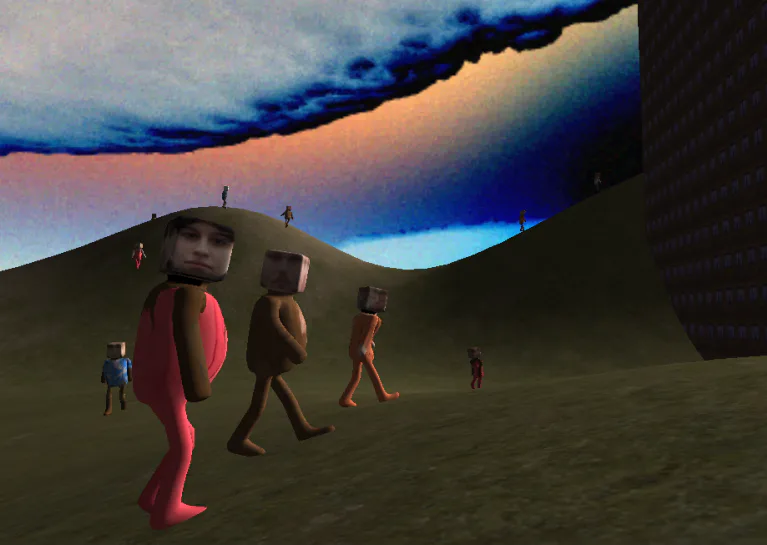
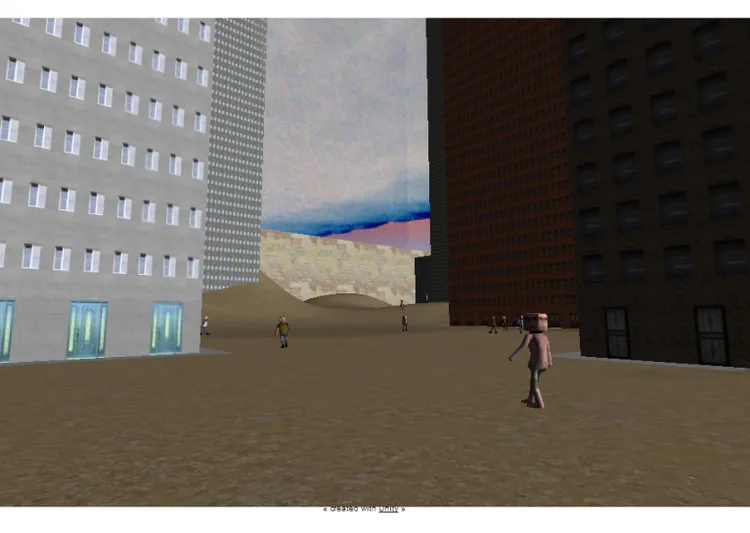
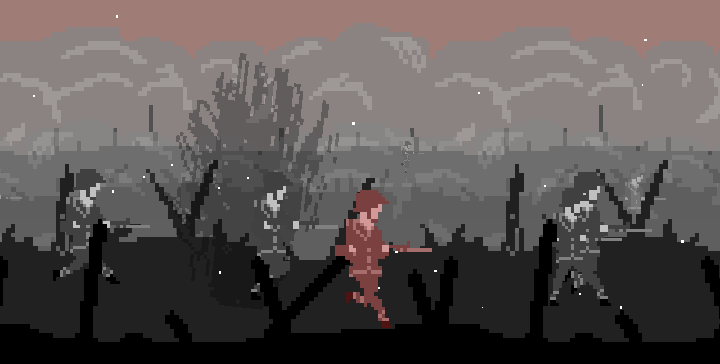
Photos are of FACE, a Global Game Jam Game




1 comment