
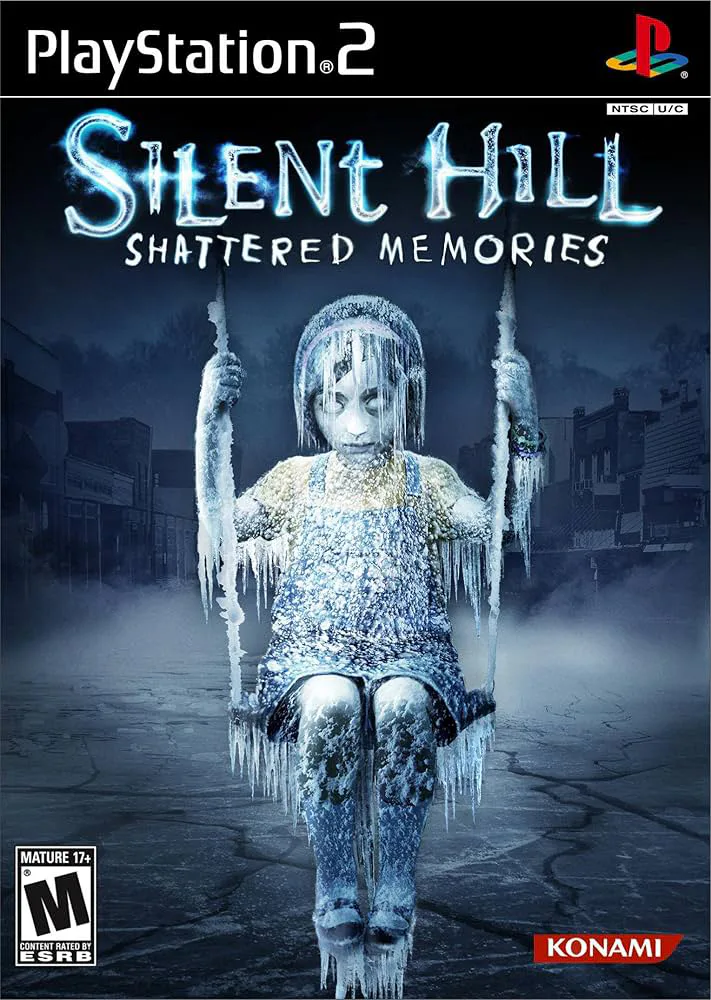
I would give Silent Hill: Shattered Memories a confident 8.5 out of 10.
From a professional lens, evaluating narrative design, player psychology, mechanical cohesion, and artistic direction, it stands as one of the most daring experiments in the survival horror genre. It is not simply a reinterpretation of Silent Hill; it is a deliberate deconstruction of it. Where the original relied on fixed camera angles, oppressive combat limitations, and fog-bound obscurity, Shattered Memories pivots toward psychological introspection and player profiling as its central mechanic.
What makes the game exceptional is its structural framing device: the therapy sessions. On paper, that concept sounds like a gimmick. In execution, it becomes the foundation of the entire experience. The game quietly tracks your choices, how long you look at certain objects, how you respond to morally ambiguous questions, whether you examine alcohol bottles or family photographs, and then recalibrates the world around you. Characters shift in demeanor. Dialogue subtly changes. Environmental details reconfigure themselves. The result is a horror experience that feels disturbingly personal without ever explicitly breaking immersion.
Mechanically, it is controversial. The absence of combat was, and still is, divisive. There are no traditional weapons, no tactical decision-making around resource management in the way earlier entries demanded. During the “ice world” chase sequences, you can only run, hide, barricade doors, and survive. Some critics argue that this strips away agency. I would argue it refocuses agency. Instead of mastering systems, you endure systems. The horror comes not from fighting back but from vulnerability, an intentional thematic alignment with the game’s emotional core.
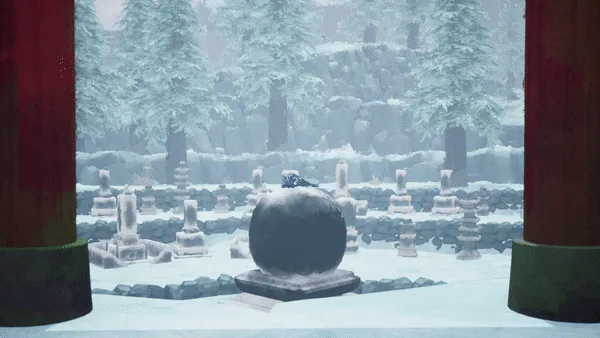
The ice transitions themselves deserve recognition. The moment when the environment freezes over, when warmth drains from the screen and the world fractures into something hostile, creates a sharp tonal shift. The sound design amplifies this transformation beautifully. Ambient audio becomes brittle, mechanical, predatory. The creatures are faceless, distorted reflections rather than clearly defined monsters. They feel less like enemies and more like manifestations of repression.
Visually, the game does remarkable work considering its hardware origins (particularly on the Wii). The use of lighting, shadow, and desaturation communicates psychological states rather than merely decorating the environment. It does not attempt photorealism; it leans into mood. Snowfall replaces fog, and the effect is strikingly isolating. The town feels emotionally cold rather than physically obscured.
Narratively, it is where the game truly excels. The reinterpretation of Harry Mason is deliberate and ultimately subversive. The story’s final revelation recontextualizes everything that preceded it. It reframes the journey not as a father searching for his daughter, but as something far more introspective and tragic. That twist is effective not because it is shocking, but because it is thematically consistent. The game spends hours quietly building toward it, layering subtle behavioral clues in dialogue and environment design.
Compared to later entries like Silent Hill: Homecoming, which leaned heavily into combat and Western horror stylization, Shattered Memories feels more restrained and psychologically intimate. It understands that Silent Hill is strongest when it explores guilt, memory, denial, and identity rather than spectacle.
That said, it is not flawless. The chase sequences can become repetitive. Once you understand the pattern, flare, sprint, hide, barricade, the tension loses some unpredictability. Replay value, while mechanically varied through psychological profiling, does not drastically alter core progression. And players who prefer traditional survival horror mechanics may find its stripped-down gameplay unsatisfying.
However, as an artistic statement, it succeeds. It respects the franchise’s core themes while challenging its conventions. It asks a rare question: what if horror adapts to you instead of you adapting to it?
In a professional evaluation balancing innovation, execution, atmosphere, narrative cohesion, and replay structure, an 8.5 feels earned. It may not be the most mechanically complex entry in the series, but it is arguably one of the most intellectually interesting.








0 comments