
Welcome back! It's been a long time since I write a devlog and, while I was tempted to keep on working on the Engine without writing much, I think it'd be unfair to keep you in the dark about more gameplay mechanics - the animatronics' gameplay mechanics, more specifically. Keep in mind that, as every map can be customised, these mechanics are a baseline that might not be relevant to specific maps. Furthermore, we'll be using exactly one animatronic for this devlog, though in most matches the animatronic team should be comprised of three to five.

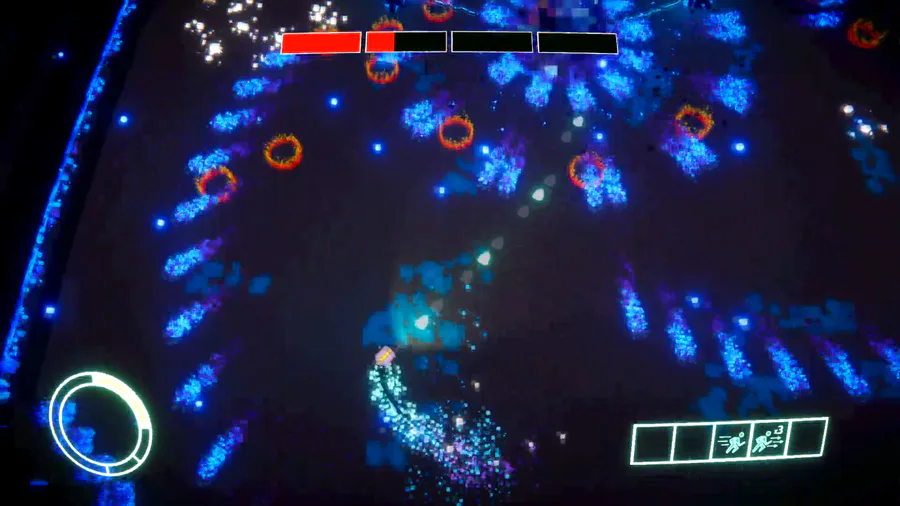
The animatronic team starts far from the night guard's office. As you can see in this screenshot, your view changes dramatically when you're an animatronic: you can see where both you and your teammates are located at all times, plus you're able to distinguish between different types of squares. Naturally, each square has its own properties, so calculating where to pass through is vital to your gameplan if you don't want to be spotted by the night guard.
You might've also noticed there's different stats on the menu: these stats vary between animatronics, giving each a unique approach to how they work. The most important are:
-Energy: how much energy your animatronic has left. Moving, getting lured, using abilities and interacting with the environment all consume energy: once you're out of energy, you get sent back to the starting square.
-Persistence: how much you can resist lures before they start affecting you. Works similarly to health points in traditional RPGs.
-Aggressiveness: how much "damage" you deal to the night guard's safety when stepping on a door. Without going into much detail, the night guard's safety starts decreasing the moment you step on a door: if it reaches zero, you're able to enter the office, attacking the guard and winning the game.
-Stealth: how easy it is for you to be spotted and trigger stealth checks. Upon doing certain interactions (such as entering a vent), you'll trigger a stealth check: this random dice throw becomes easier to succeed the greater your stealth is. If you don't succeed it, the night guard will get notified of it - in the vent's case, they'll hear a noise indicating something is in a vent.
-Blindness: the same as stealth, but for blind checks. If you get blinded (most likely by the night guard's flashlight), you'll become blinded, slowing down on your next turn.
Finally, it's worth noting that some animatronics come with special passive or active abilities, adding another layer of complexity to the game. For example, a basic ability found in all animatronics' movesets is rushing, which speeds you up in this turn, but can't be used inside vents and costs more energy than usual. Use the various animatronics available in your team to rush down the night guard, or play stealthily and go for an unexpected victory. The choice is yours!
That's everything for this devlog. As I'm currently adding online capabilities, I probably won't be able to write any other devlogs for a while, but rest assured work is going on. I hope you're as eager as us to test the game!













0 comments