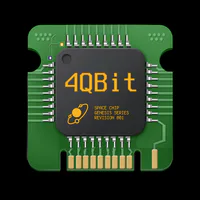
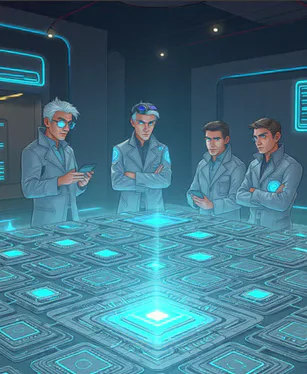
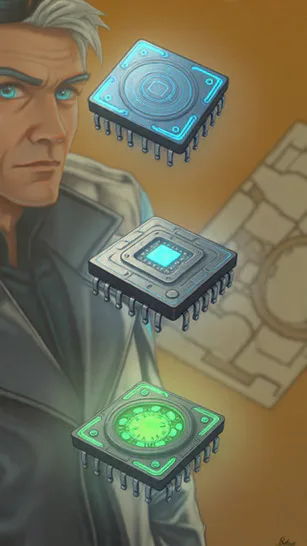
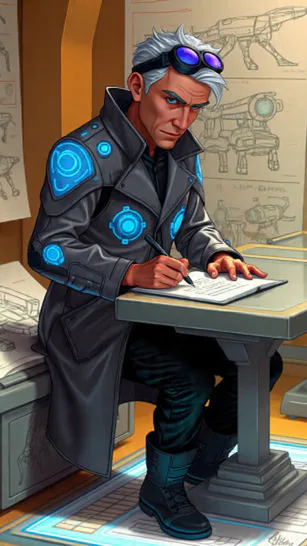
When Sugen corporation first discovered the unknown chips, their value was immediately obvious: 16,000 unique microchips capable of executing instructions no other device could handle. It was known that the chips were somehow linked and could “communicate” with each other. They required no power, never wore out, and could not be destroyed. Management decided that only one person could unlock their secret – a young but already legendary scientist named Braip.
Braip delved into the chips’ crystal structure, which consisted of a previously unknown element called Astium. He soon found that each chip housed a “brain” module capable of receiving and storing human consciousness. This meant that anyone who uploaded their mind into a chip could control drones, ships, orbital stations, and even entire colonies across vast distances, as if they were inside the device itself. However, Braip never succeeded in reproducing an exact copy of the original chip. The newly produced chips couldn’t handle such complex instructions, but they were still powerful enough for incredible feats. In the end, all the discovered chips were named Genesis, while the ones they created were called Natural – though everyone simply called them “Spacechip”.
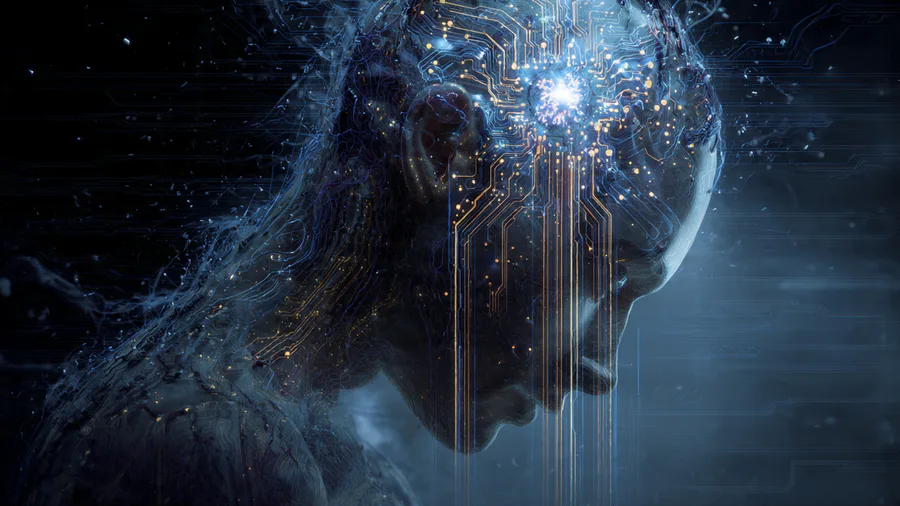
The possibility of uploading consciousness into chips led Braip to a shocking thought: eternal life as a machine. He imagined endless galactic travel, free from biological limits. New discoveries, infinite development, and the expansion of human consciousness far beyond the solar system. But when Sugen learned of this breakthrough, they immediately classified the technology. The corporation began building labs, planning to monetize every chip produced. Braip, however, believed the technology should be free. Their clash resulted in Sugen removing Braip from further research.
Undeterred, Braip secretly copied the blueprints of the Natural chips – simpler but still capable of storing data and executing many instructions – as well as the Astium synthesis method, and released them into the public domain. Then, uploading his own consciousness into a stolen Genesis chip, he fled the solar system in his own drone, disappearing from Sugen’s sight. The corporation was furious, having lost massive potential profits from Natural chip sales, which could now be produced by almost anyone.
Braip, now a silent wanderer of space, became a living legend. After uploading his mind into a Genesis chip and departing on his drone-ship, he realized he could become the voice of a new era – an era where metal and code replace fragile flesh.
Since then, no one has seen him, but he publishes articles in the shared network that links all chips: “How to turn a barren asteroid into a blooming garden,” “Five ways to optimize drone operation,” “Why life in a robot isn’t the end, but the beginning.” Each piece is accompanied by new blueprints – from simple ore-mining modules to complex gravity generators. He releases everything for free, and anyone who uploads their consciousness into a chip automatically gains access to these materials through the network’s collective memory.
Thanks to this, even the humblest colonists can assemble their own ship, launch an automated factory, or build an orbital farm without spending years on research. Rumors of Braip, who lives forever in a crystalline body, spread faster than light signals. Those who choose to transfer their minds into chips begin their journeys, proclaiming:
“Freedom in crystal – our shared path.” Braip’s name becomes a vow: freedom from biology, infinite expansion, and the chance to leave a mark across the galaxy...



0 comments