

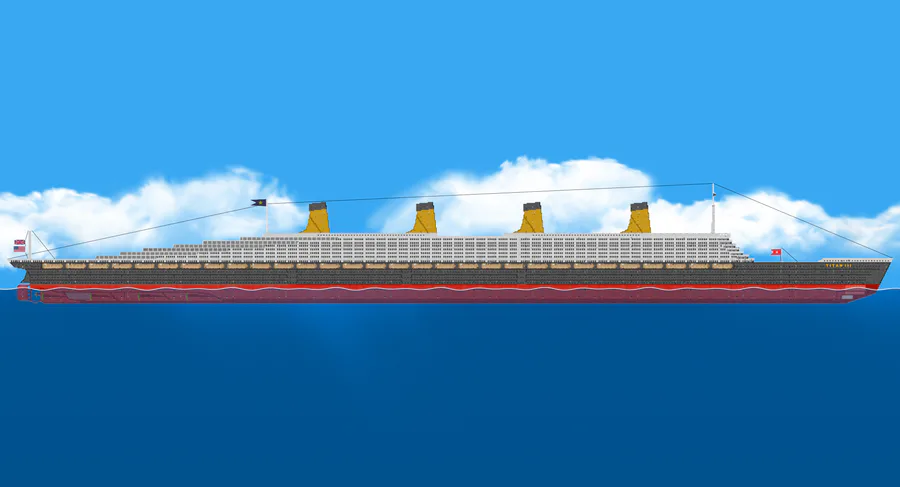
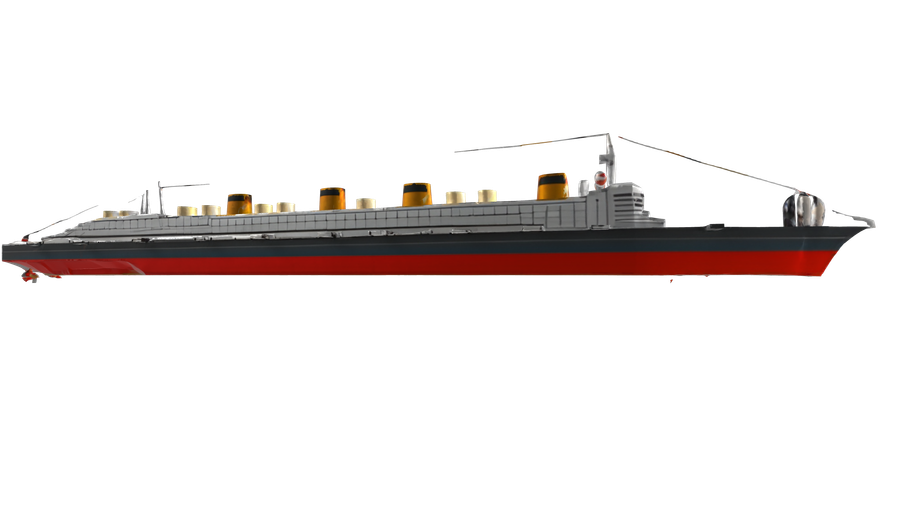
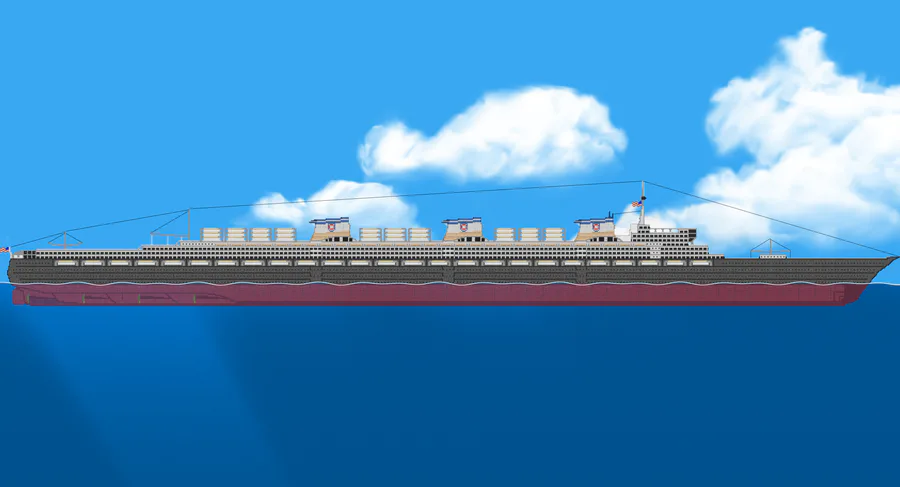
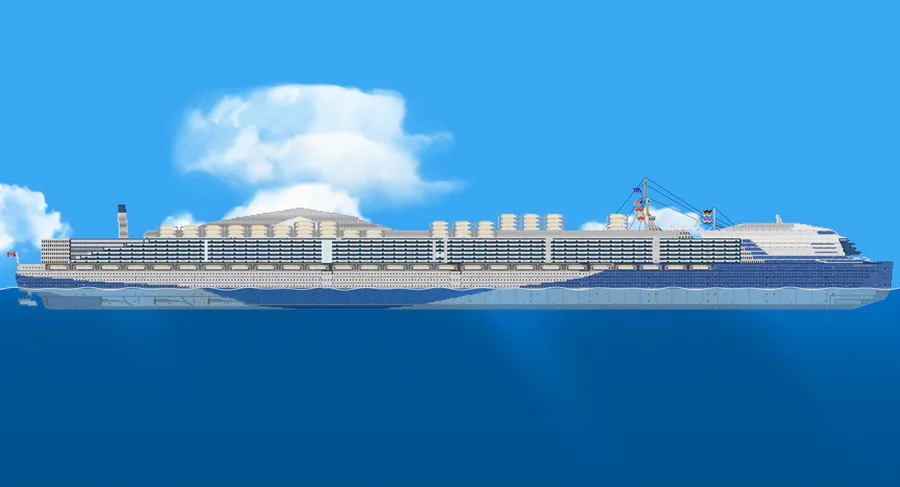
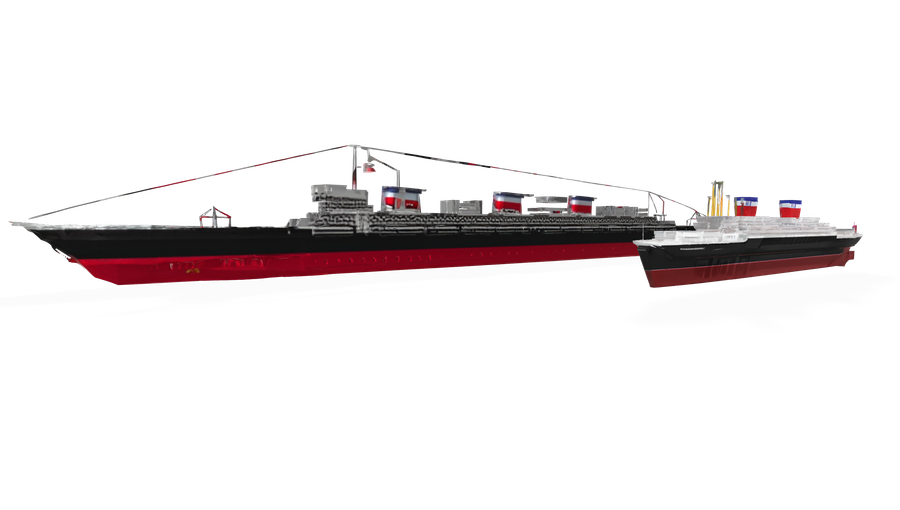
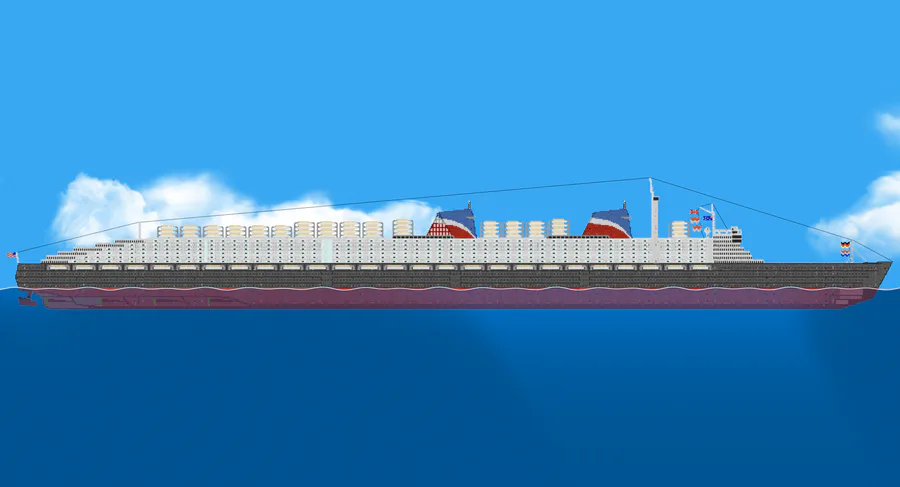
The M.S. Titan III is not merely a vessel; it is a profound reimagining of human civilization on the high seas. Spanning nearly a kilometer in length and housing a population equivalent to a major metropolitan center, it represents the absolute apex of speculative naval engineering. 1. Dimensional Supremacy: The 960-Meter Hull
At 960 meters (3,150 feet), the Titan III obliterates every record for man-made moving objects. To visualize this, if the ship were stood on its stern, it would dwarf the Burj Khalifa by over 130 meters. This length is not merely for show; it is a functional requirement for extreme speed.
Wave-Bridging Mechanics: In the volatile North Atlantic, standard ships "pitch" (tilt forward and back) as they climb over waves. The Titan III is so long that it spans multiple wave crests simultaneously. This "bridging" effect keeps the hull level, providing a stable platform that eliminates sea-sickness even while traveling at highway speeds.
Post-Suezmax Reality: With a 96-meter beam, the ship is physically incapable of using the Panama or Suez Canals. It is a "Global-Class" liner, designed to dominate the open oceans, requiring specialized deep-water ports in cities like New York, London, and Tokyo.
2. Propulsion: The 1.1-Million Horsepower Heart
To propel 300,000 tons at nearly 100 mph, the Titan III utilizes a Multi-Source Hybrid Grid generating 1,100,000 shaft horsepower (shp).
Hydrogen Fuel Cells: Providing a clean, 350,000 shp base load, these cells emit only pure water, which is recycled for the ship’s internal gardens.
The Cavitation Solution: Standard propellers would disintegrate at 91 knots due to vacuum bubbles (cavitation). Instead, the Titan III uses High-Capacity Water Jets, sucking in massive volumes of seawater and ejecting it at high pressure to create vibration-free thrust.
Battery Buffers: For "Record Burst" speeds, massive solid-state batteries discharge an additional 300,000 shp, allowing the ship to accelerate like a racing boat.
3. The Floating Metropolis: 128,000 Souls
The Titan III is a self-contained city-state with a total population of 128,000 people (90,000 passengers and 38,000 crew).
Urban Logistics: Walking the length of the ship would take 15–20 minutes. Consequently, the ship features an Internal Light Rail System and "People Movers" that traverse the main promenade decks.
The Crew Ecosystem: The 38,000 crew members live in a dedicated "Inner City" located in the lower decks, featuring their own schools, hospitals, and recreational zones to maintain a high quality of life during long-term deployments.
4. Record-Breaking Velocity: The 91-Knot Threshold
The current Blue Riband record is 38.3 knots. The Titan III aims for a top speed of 91 knots (104 mph).
Fluid Dynamics: At 100 mph, seawater strikes the bow with the force of solid concrete. The ship’s Wave-Piercing Bow is constructed from experimental alloys that "slice" the water's surface tension.
Aerodynamic Tiering: To prevent the massive superstructure from acting like a parachute, the decks are tiered and streamlined, using active "wing flaps" to manage wind resistance and maintain downward pressure.
5. Material Science: High-Tensile Resilience
A ship this size would snap under its own weight if built with traditional steel. The Titan III uses a "Skeleton of the Future":
High-Tensile Steel (HTS): Used for the lower hull to allow for flex during high-speed maneuvers.
Carbon-Fiber Superstructure: The upper 20 decks are made of carbon-fiber reinforced polymers, significantly lowering the center of gravity to prevent capsizing.
Air Lubrication System: To reduce drag, the ship blows a constant "carpet of bubbles" under the hull, allowing it to glide on a layer of air.
6. Safety: The High-Capacity "Life-Ark" System
Evacuating 128,000 people is a logistical nightmare. The Titan III replaces traditional lifeboats with Mega-Life Arks.
2,000-Person Capacity: Each Ark is a self-righting, unsinkable mini-ship with its own medical bay and propulsion.
Automated Launch: In an emergency, these Arks are deployed via gravity-fed rail systems, ensuring they can be launched even if the ship is listing heavily.
7. Verticality: The 40-Story Skyscraper
Standing 131 meters tall, the Titan III offers views from the bridge that extend over 40 miles to the horizon.
Deck Hierarchy: The ship features 40 levels, with the lower decks dedicated to heavy machinery and crew, and the upper decks featuring open-air parks, luxury "Sky-Villas," and panoramic glass-bottomed observation lounges.
8. Sustainability: The Zero-Emission Goal
Despite its size, the Titan III aims for a net-zero carbon footprint through:
Solar Integration: Over 100,000 square meters of solar film are integrated into the hull and windows, powering the ship's massive hotel load (lighting, AC, and elevators).
Waste-to-Energy: Onboard plasma gasification plants turn 100% of the ship’s waste into energy, leaving zero plastic or organic waste behind in the ocean.
9. Economic Impact: A Floating GDP
The Titan III functions as a moving economic zone.
Charitable Foundation: Inspired by the original S.S. Titan concept, a portion of every ticket sale is diverted to global pediatric health organizations.
Onboard Markets: With 128,000 residents, the ship hosts its own stock exchange, manufacturing hubs (using 3D printing), and a digital currency designed for use across the Titan fleet.
10. The Legacy of Titan: Reclaiming the Blue Riband
The Titan III is a spiritual successor to the Golden Age of Liners. While modern cruise ships are "floating hotels," the Titan III is a "High-Speed Transporter." It seeks to reclaim the Atlantic crossing record, not just by hours, but by days, potentially making the trip from New York to London in under 30 hours.








0 comments