The State of the Market
When I started following the indie scene almost a decade ago, getting your game onto a digital distribution service was unheard of. With the only paid digital distribution service at the time being Steam, there wasn’t much hope for an aspiring indie developer to reach the volume of potential buyers that they have today. Only the most premier indie games were given a chance on the Steam market, with Eternity’s Child and Aquaria being some of the very first indie games available on the Steam marketplace. Fast forwarding to today’s indie environment, you can see that digital distribution services are everywhere, and that a developer has the option to pick and choose which platforms they feel like selling or hosting their game on.
There’s been an interesting phenomenon with indie games and their audiences expectations since they’ve been introduced into the market. For the most part, indie games are seen as budget titles, games that resemble something closer to the arcade games you’d find in your pizza parlor back in the day. You get a decent(I would argue great) amount of enjoyment, for a relatively small amount of money and you’d move on to the next title that catches your eye. Looking at the Steam marketplace right now, I can’t help but feel that the prices serve to perpetuate this expectation. There’s isn’t a game above $20 dollars, with more than half of the games under $15. If a game dares to push the limit on pricing, there’s an immediate pushback by the community on pricing
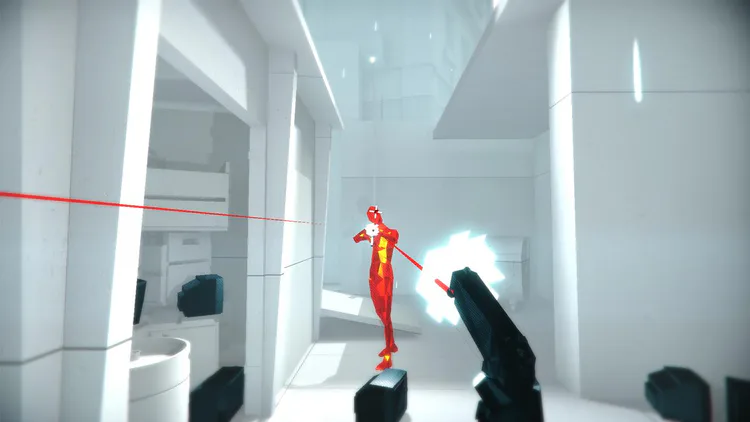
During Superhot’s initial release, there was a torrent of criticism surrounding the game’s length for the price you pay.
There have been a number of excellent examples of this recently. There’s been an uproar over the price of Stephen’s Sausage Roll, Firewatch, Superhot, No Man’s Sky and The Witness, all of which are excellent games by the way. All of the games listed push the boundaries of an acceptable price for an indie game, with negative reactions towards everything from the length of the game versus to the price, to the graphics. In the same vein, all of these games have pushed the envelope to bring something new and different, whether it ranges from the narrative, level design, atmosphere or technology, the developers have priced their games in a way that they think is proportional to the time and effort that they put into their game. Much of this article was inspired by the vitriol that spawned from the pricing and release of Stephen’s Sausage Roll. At the end of my review, I start to delve a little bit deeper into the topic of what constitutes a fair pricing for games and whether or not the game would appeal to my readers. As I dug into the Steam discussions, reviews and general comments by the public on the game, it became apparent that the overall community expects a completely different package than what many of these developers may be offering. In the case of Stephen’s Sausage Roll, many saw the mediocre graphics and lackluster trailer, but didn’t consider the mind-bending puzzle designs that is crammed into every single level. When looking at Firewatch, we see an entirely different complaint, with many player praising the graphics and story, but criticizing the longevity of a $20 dollar game. We also see this case in Superhot, where the minimalistic graphics and unique gameplay mechanics are praised, but the length of the main campaign falls under heavy criticism.
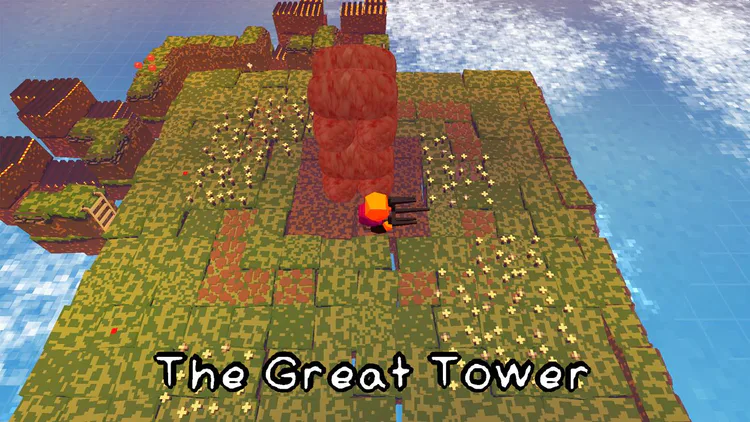
Stephen’s Sausage Roll is the most recent “offender” with many citing $30 as much too expensive for “A simple 3d puzzle game.”
When looking at all of these complaints, it becomes obvious that indie games are held to a different standard, and more importantly, a different expectation than AAA games from notable studios. It quickly becomes obvious that $10-$15 dollars for an indie games starts to become the norm, as these games are usually much smaller in scope and production value than their AAA counterparts. Once a game starts to break from the mold, do the issues start to bubble up. Now they aren’t seen as indie games anymore, but as competitors to these AAA games and are held to the same standard. Instead of looking at the strengths of a game, the weaknesses are looked at instead. If we bring this back to my previous examples of high profile indie games, the unique gameplay of Superhot is a plus, but the longevity of the game is a huge minus; the level design for Stephen’s Sausage Roll may be a plus, but the relatively high price isn’t enough to offset that. I would argue that indie games aren’t too expensive, the price is relative to the perceptions and preferences of the consumer base. Rather than looking at the negatives of a game, I’d push for people to look at the strengths that a game has. Take a step back and ask yourself, is $25 worth it to play a game where the bullets move when you move? Is it worth $30 to have my brain hopelessly twisted while I roll sausages around? Is it worth $60 to explore an almost infinite amount of planets?
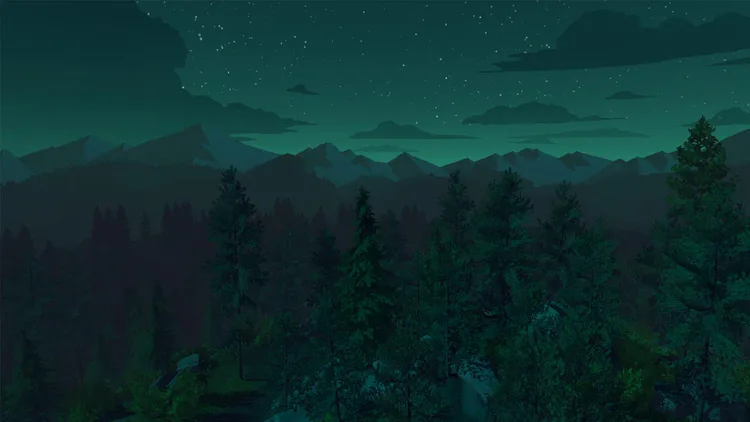
Again, there was much controversey over Firewatch’s price versus actual play time.
While it’s easy to place the blame purely on the consumer, that really wouldn’t be fair. The developers share some blame in this “indie games are too expensive” phenomenon too. This may just be a side effect of being on Steam, where the prices are competitive and the sales are continuous, but continual price drops serve to exacerbate the phenomenon, rather than help remediate it. With the massive amounts of price drops and weekend sales that roll through the indie game landscape, it’s hard to fault the consumer for wanting to bide their time until the price of a desired game is below 50%. These oft-occurring sales not only serve to devalue the game(and if the game was recently released, anger your customers), they bring down the overall price to quality ratio for a game. While giving weekend discounts to games do serve to boost overall sales, developers need to be mindful to do so in moderation.
With the massive amounts of price drops and weekend sales that roll through the indie game landscape, it’s hard to fault the consumer for wanting to bid their time until the price of a desired game is below 50%.
The price and expectation from indie games is one that will require proactiveness from both potential consumers and developers. The indie game environment is an interesting ecosystem, where all parties are trying to get the most bang for their buck. Consumers need to be mindful of how they approach games and be mindful that crassly commenting that games are too expensive do nothing to help the community, while developers need to remain cognizant of the effect their pricing model and price cutting will bring to the overall community. With all that being said, the advent and dispersal of indie games in the marketplace is one that I wholeheartedly embrace. Quality indie games are in high abundance, with more heart and sincerity than I find in most AAA games, and the public’s perception towards indie games have shifted from caution to enthusiasm.
With all of these factors in mind, I’d love to hear about your take on this topic. Feel free to comment below and let’s start a dialogue! Alternatively, hit me up on twitter @indiesense 









34 comments