

Bugs… We all hate them. Now there are many stories going on about how bugs got their name, but they all refer to the animal.
A famous one is that in the time of punch cards a little insect would sometimes sit in one of the punched hole, causing the computer to misread the instruction and malfunction as a result.
Another story I heard dates back to the big computers used to decipher German encrypted messages, in which sometimes a bug would get into the computer, sitting on one of the electric connections, getting itself killed in the process, but also the computer to malfunction.
The latter story appears more likely and the programmer who found it even conserved this first bug:
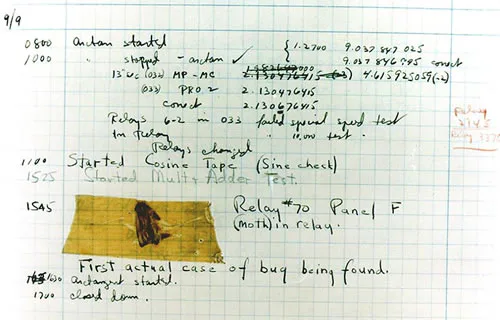
Essentially there is a lot of debate over the terms glitch and bugs. There is not really an official consensus, other than that “bug” is the official term for a malfunction caused by a mistake of the program’s coder, and not “glitch”, although the latter is getting accepted more and more (unfortunately).
Now the term glitch is sometimes “acceptable” for when a program can do things the coder’s never intended, however most glitches in this definition are the result of bugs (although that is not necessarily so) , so even if that definition is true, it is understandable how the terms got mixed up.
Looking it up it I found this: “said to have been in use in radio broadcast jargon since early 1940s, American English, possibly from Yiddish glitsh “a slip,” from glitshn “to slip,” from German glitschen, and related gleiten “to glide” (see glide (v.)). Perhaps directly from German. Apparently it began as technical jargon among radio and television engineers, but was popularized and given a broader meaning c. 1962 by the U.S. space program.”
I’ve always hated the term “glitch” though in the context of a bug, but maybe that’s because I began coding in the time nobody in his right mind would even consider using that word. :P
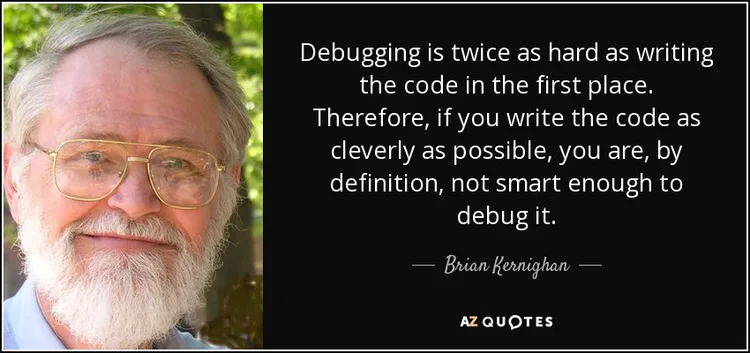
Bugs have always been a problem in computers, and there’s hardly a program in existence that does not contain at least one bug. This has several reasons, and one is stated above. Of course, many tools have been designed in order to bust the statement above, and although debugging has become easier, it’s still not an easy feat.
My own philosophy is that you only know if your program is bug free when it has reached the audience and even then it can take more than a decade for some bugs to surface.
And not to mention “It is impossible to make anything foolproof because fools are so ingenious” (credited to Murphy, as one of his famous laws). You never know what foolish things people may with your program and everything becomes dangerous in the hands of an idiot.
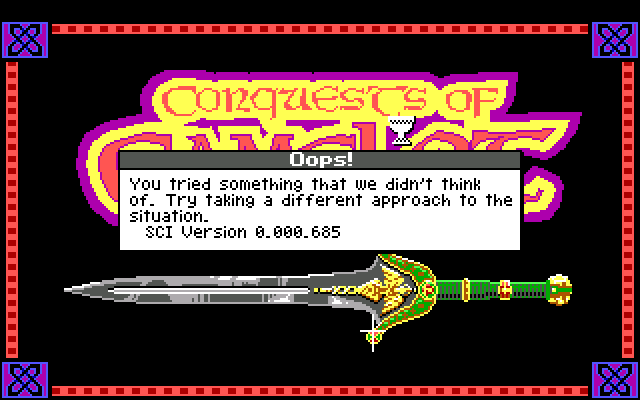
It is also for this reason that it’s very frustrating when people act like if they are God when they report a bug and start insulting a product’s developer, and even start getting demanding “FIX! NOW!” or even coming with empty threats as “Fix! Or I’ll uninstall!” (Go ahead, I don’t need you to use my stuff anyway when you have that attitude). And the worst part is that some of these rude idiots are even coders themselves, so they should know better, as they should know how hard it is to get your code bug-free (read: impossible). Of course, we coders want to know when you found a bug. It’s not possible to have not any slip past our attention, and if you don’t tell us coders, we’d probably never know. You most try stuff we never thought of (a message Sierra games were infamous for), so please be polite.
One thing is clear… bugs and computers are tied to each other forever!










6 comments