
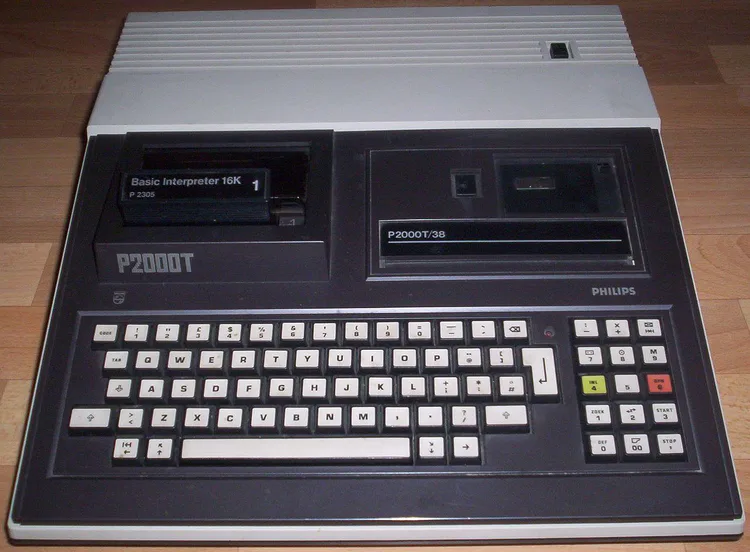
Really this brings back memories. I was 8 or so when I first touched a computer. They always appealed to me even before I touched them. Computers were often demonstrated in the show “Wondere Wereld” (means “Wonderful World” or “Wonderous World” in Dutch), but this was the first time I actually touched one, and also the computer on which my first lines of code have been written.
The cartridge you see in the slot contains the actual OS, which was also a BASIC interpreter. On many home computers back in the day, BASIC also served as the OS interface. The commodore 64 and the MSX were also known for this.
The big advantage, just push the power button and in only 2 seconds or so the OS was all powered up, and you could start with your work.
And these tiny little cassettes were your data storage. They were a huge improvement, as cassettes used so far were just normal audio cassettes with about 30 minutes play time each side, and that was your loading time for a simple program too. Philips changed that with these mini cassettes which would automatically rewind and quickly be searched for the actual data, which would then be loaded. I know they are a complete laugh compared to the USB sticks we use to day, but hey, this was the 1980s, a time you may not remember, but I do know it was back then pretty revolutionary.
It was one of the best computers for home usage back in the day, and it had a lot of popularity in the Netherlands. It ain’t so weird that many schools had this computer in order to train their pupils with using a computer, although I must admit that only a few teachers actually KNEW their stuff back then… It was also new to them, you know. When you’ve read my previous article you know that the first electric computer was only revealed to the public 1 year after the Second World War. I’m of one of the first generations where a some kids could grow up with computers.
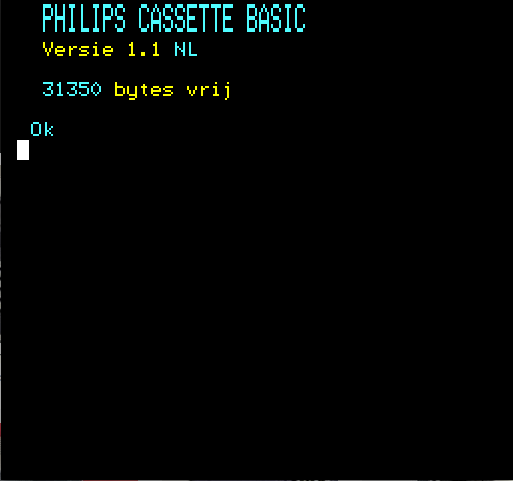
Well this was what you saw just after starting up with the BASIC cartridge inserted. No cool GUI interfaces back then, just a straight command line. Maybe even better, the Blue Screen of Death didn’t exist, and people back then would laugh if you ever spoke about that issue back then. Computers were RELIABLE back then and bugs were not tolerated, but the system was so simple to code on, and debugging wasn’t so hard either. The simpler the software the simpler it is to debug. Right?
Of course, let’s show a picture of the P2000T in action ;)
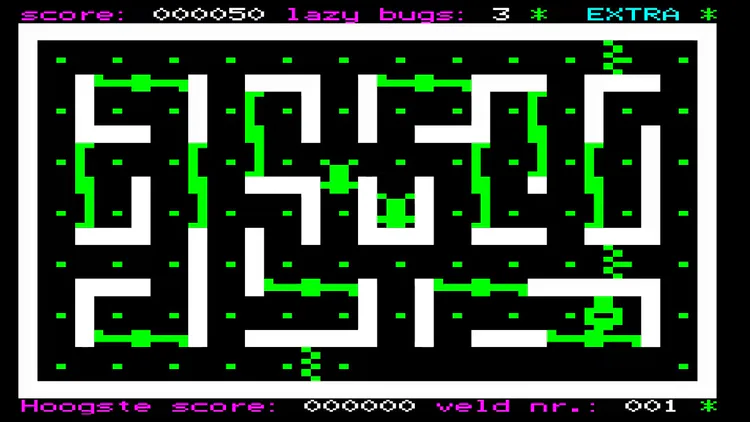
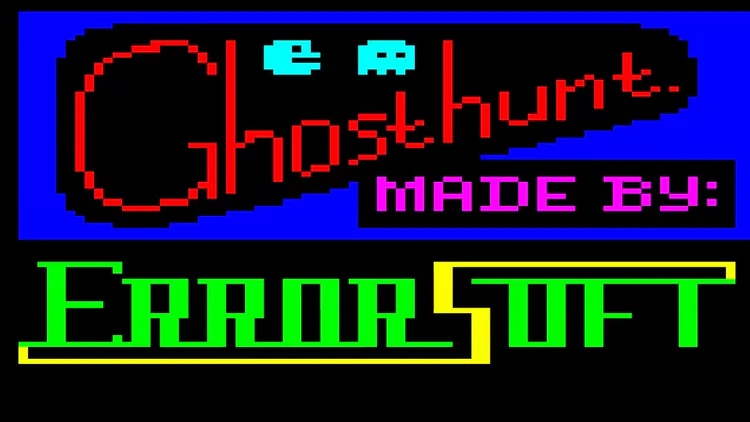
Yeah, this is what a simple game looked like back then. I gotta say, I recently played that game on an emulator (I did’t have it back in the old days on the real P2000T), and it’s pretty fun. Perhaps you recognize the screen lay up if you had the “Text feature” on your TV. Most countries have either deprecated it or removed it entirely, but some countries (like the Netherlands) still have it, and yes, that feature was based on the same graphic technology as the P2000T used. The predecessors of the internet, Viditel and VideoTex also used this graphic technology.
Okay, let’s give you a simple P2000T code:
			10 PRINTCHR$(12);
20 FORI=1TO10
30    PRINT"Hello World!"
40 NEXT
50 END
That would print “Hello World!” 10x on the screen, oooh, it’s just terrible to see how horrible code looked back then ;)
Oh yeah, the P2000T did have it’s own PacMan clone game. It was called “Ghost Hunt” ;)
The P2000T computer was NOT exactly cheap. It was 3000 Dutch Guilders back in the day to purchase one. That comes close to somewhere between $1200 and $1400 in U.S. money (and yeah also €1200 and €1400, the euro and the U.S. dollar are not that far of in value, although the euro is mostly worth a tiny bit more). Today only people who need a really big deal from their computers would pay that much (at least in the Netherlands, as I do not know how computers are priced in other countries).
Lastly I’ll give you some specifications: Spec | Data
CPU | Z80
Frequency | 2,5 MHz
ROM | 4 KB
RAM | 16 KB, expandable (hard to believe that was a lot back then, eh?)
Text mode | 24 rows x 40 collumns
Colors | 7 (that was a extremely much back in the day)
Audio | 1 channel (yes, I’m for real).
It was not much, but still I miss the days…. sob!
Rest in peace my dear, P2000T…
Thou shalt not be forgotten.





11 comments