
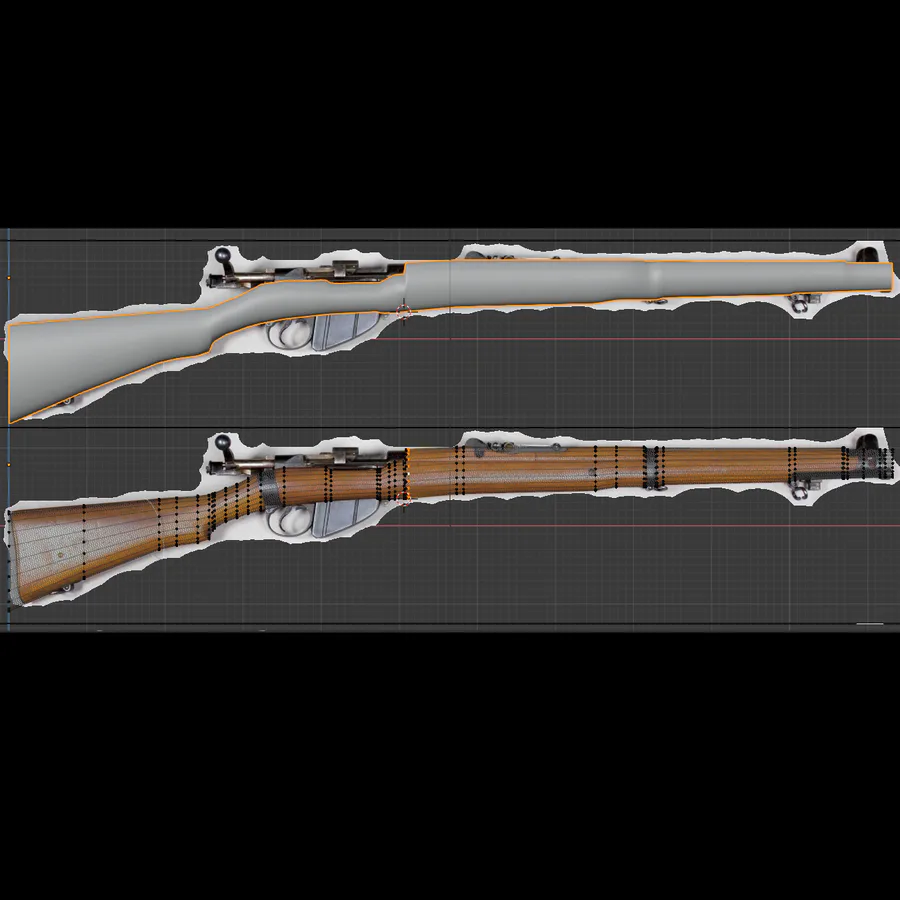
We all have to start somewhere. Here's where we started:
A quick blocking out of the Lee Enfield .303 rifle used by the British. We'll use this model to play test and build the shooting mechanics of Our Great War.
Next up
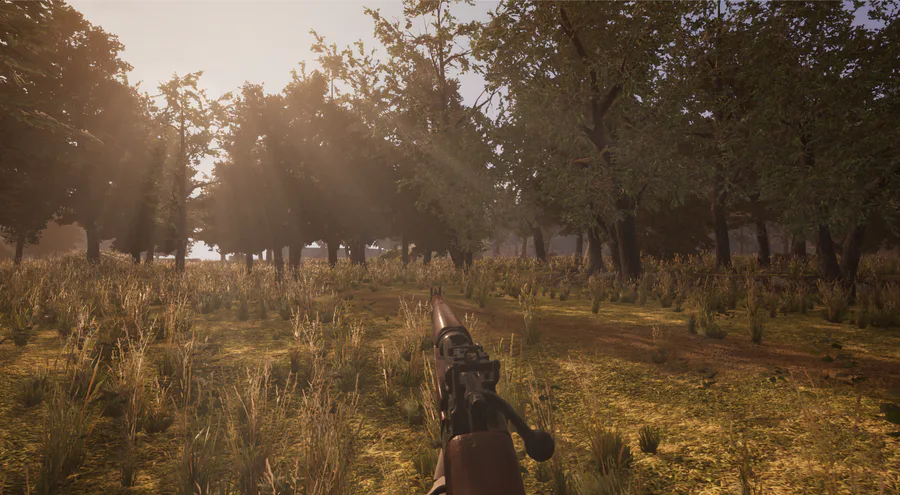
Lots of technical difficulties are popping up, from dead computers to engine crashes. But we're still making progress! Here's a sneak peak at one of the latest levels being developed.
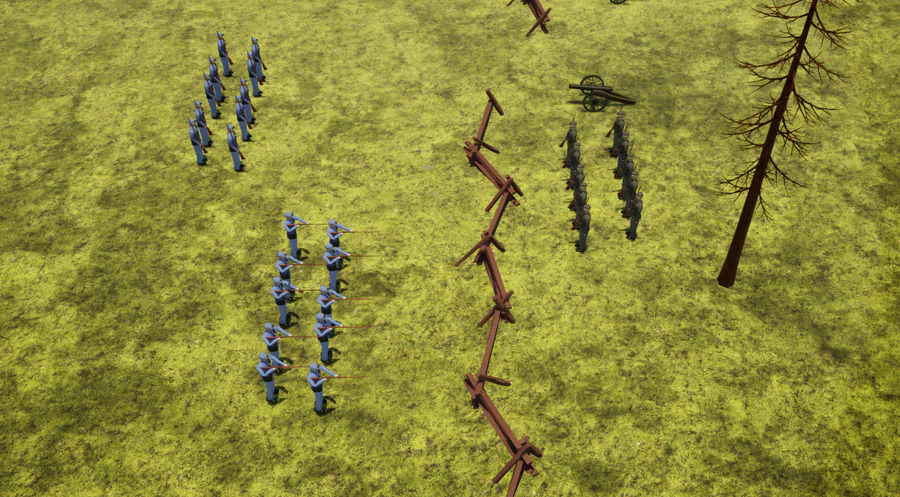
Our Brotherly War is an action strategy game where you move your armies around the United States and engage in real-time battles with infantry, cavalry and cannons.
Casualties are permanent, resources are scarce, and the battles are uncertain.
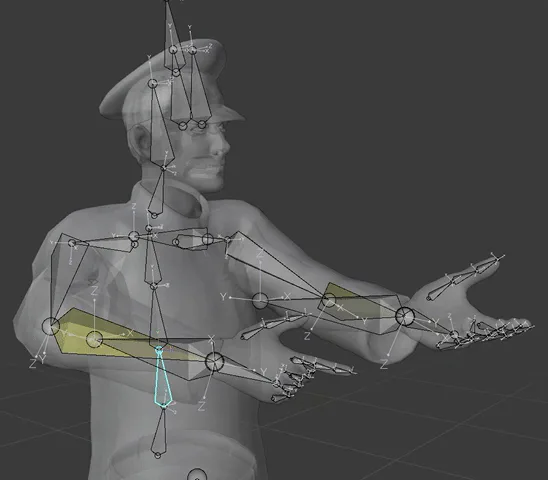
Idle animation is almost done. I made the bones visible so you can see how each one has to move in a particular way to make the whole body move. We then blend these animations in with other ones, such as walk/run, look up and more.
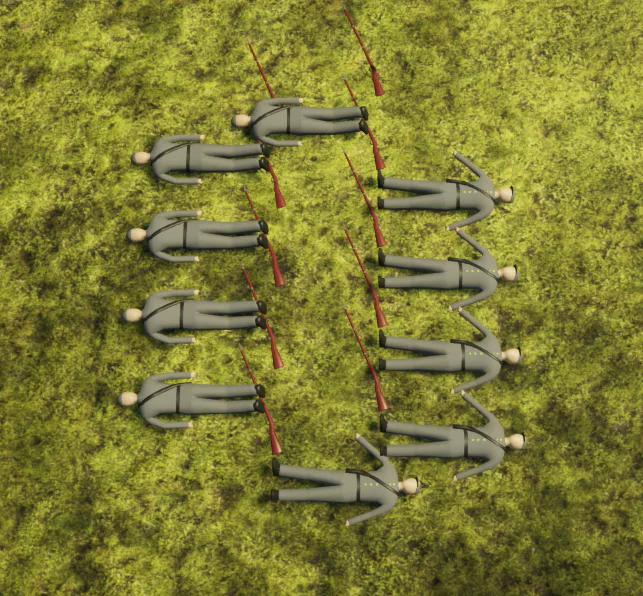
Maybe not enough various in the death animations?
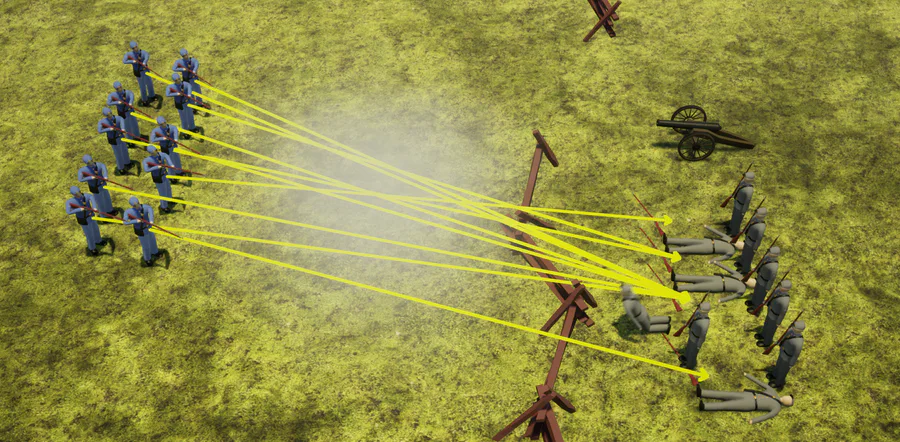
Revamped the targeting system to be more chaotic, like battles tend to be.
There was a bug where, if the unit was coming from the flank, only the one corner solder would be targeted, essentially getting all the bullets.
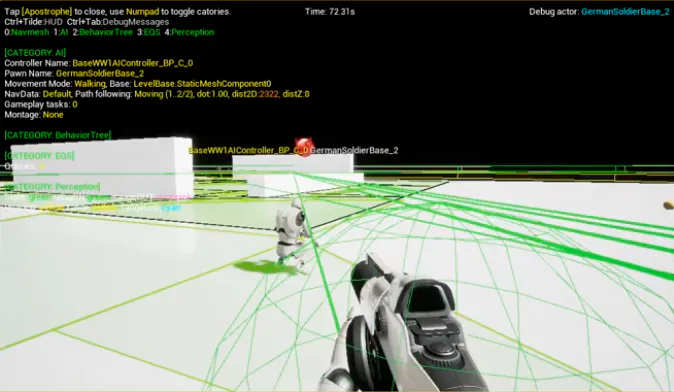
Testing enemy AI is complex and visual debugging and feedback is an integral step to figure out what's going on in real time. Thanks to our AI programmer James on getting the enemy AI in.

Need to add a bit more variation in my death animations since they just fall forward or backward. Death isn't this neat and tidy.
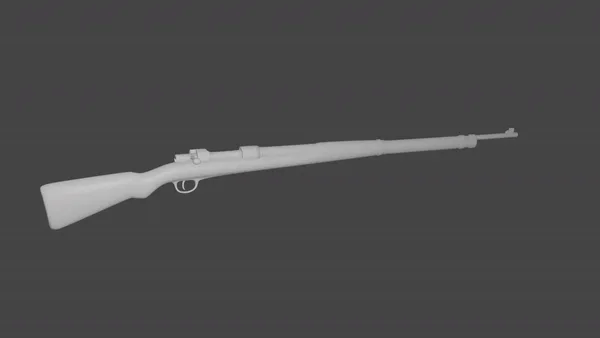
We're still working on the Gewehr 1898 German rifle: adding more detail, UV unwrapping the mesh to apply texture via a texture painting app, then baking it all into the final game asset. Since this is so close to the camera, the quality needs to be high.
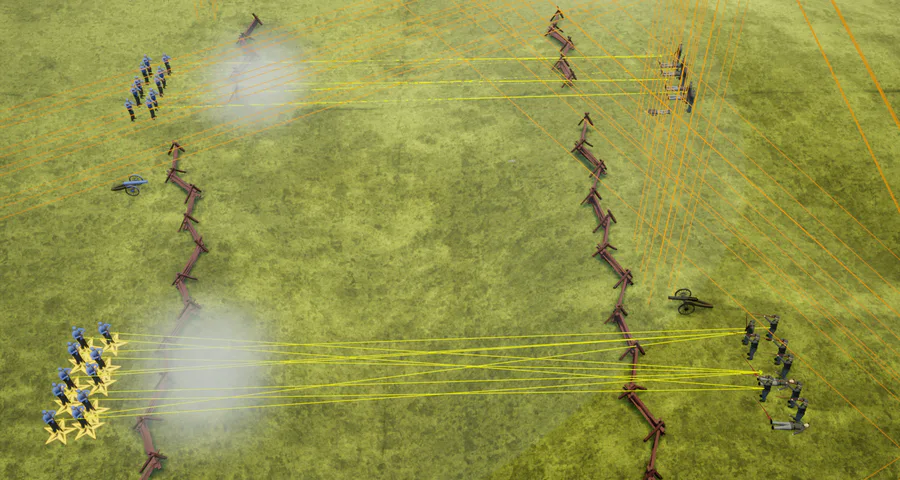
Debug lines! Testing firing-ranges and damage fall off from distance, as well as targeting various groups of enemies with a bit of chaos mixed in.
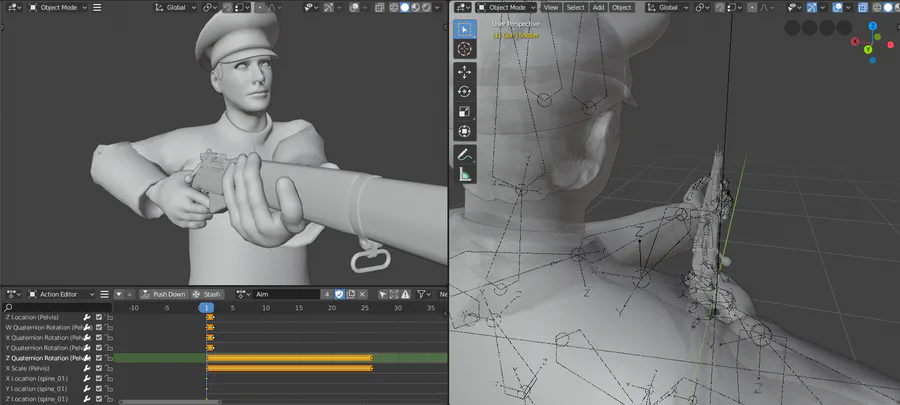
Behind the scenes look at the first person modeling and animation. While the soldier won't be seen, hands and arms (and sometimes feet) will be. So we can cull out the body in first person-only model to make it more efficient.
1 comment