Game
It's a Cube
3 years ago

​When I started this project I hadn't fully figured out how everything was going to work, so it took me some time to set it up to where the ground and the cube would interact, and I want to share how I did this.

https://youtu.be/XXEmMv52EDc


It's a Cube Devlog #2 | Cube and Ground Interaction
Welcome to another devlog! I took a couple of weeks off after my last Deathly Descent devlog about the achievements in DD, which is linked below. In today's ...
https://www.youtube.com/watch?v=XXEmMv52EDc

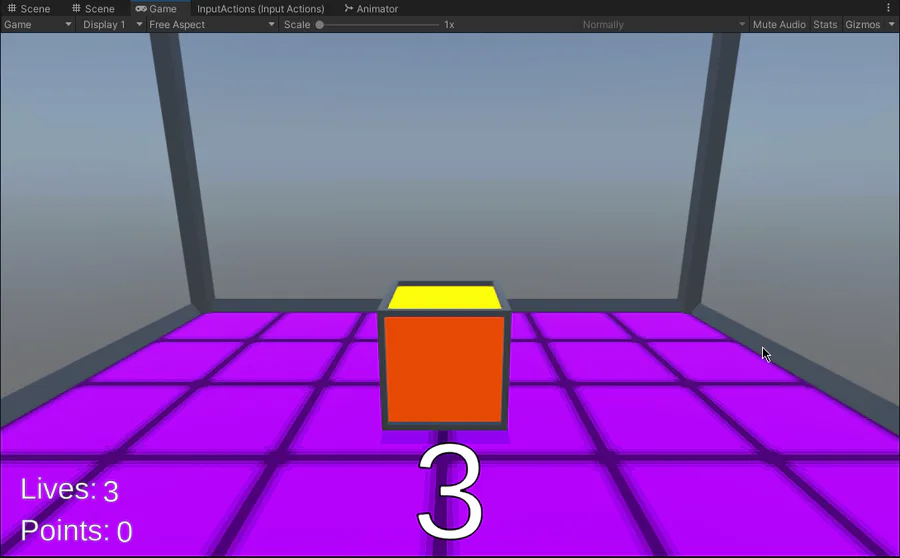
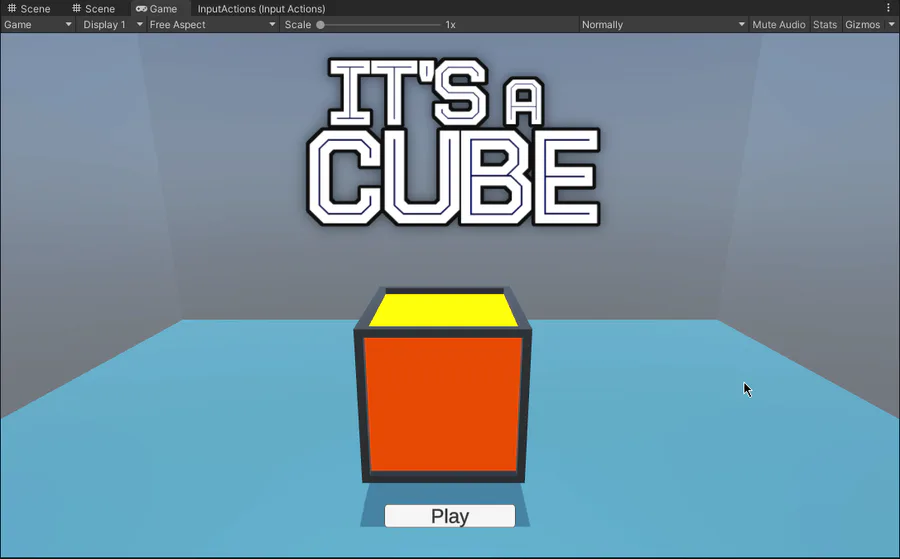
The central mechanic of It's a Cube is that you score a point when you face the correct face of the cube towards the  ground, in-game you'd know the correct face because it's the one colored the same as the ground. I guess at it's center this game is about matching colors. In order for this to work, at some point the color of the ground and the color of the cube face you just turned towards it need to be compared via script, and this took me some time to get working, so I wanted to share how I set this up.

The first thing I needed to do was set it up so the ground's color would randomize, and this was probably the easiest part, all I needed to do was randomize an integer value between 1 and 6 (for 6 sides of the cube), and I wasn't worried about the visual color change just yet since I could easily map each number to a material later once I had everything working on the technical side.

In order for the cube to interact with the ground when it's rotated, I childed 6 triggers under the cube object and positioned one by each face of the cube, these would act as my way of telling the ground that the cube has rotated through the OnTriggerEnter method, which is called whenever the object that the script is attached to enters a trigger. After that I created a simple script for the cube triggers containing a single number (again between 1 and 6, and this time in correspondence to the sides of the cube) and from there I could compare the grounds number to the triggers number whenever a trigger hit the ground, and if the numbers match, then I add to the players score. 

With all of this working internally, I then wrote a third script that would set the grounds material based on what it's current number was. The trickiest part of doing this was making sure I ordered the array properly so that each number matched correctly with it's material array index. One misalignment would cause the grounds color to appear different from the color of the correct cube face, which would be very confusing for the player. Not gonna lie I did make this mistake at one point, luckily it's pretty easy to fix if you do! With that done, the basic functionality of It's a Cube was pretty much complete! This all took me around an hour total, and from there I could expand on these scripts to add sound effects and implement them into a game play loop. I hope you found this interesting! Thanks for taking the time to read this!



0 comments

Loading...

Next up

This is a much larger (in terms of resolution) video than I've shared here before!!!

This is a full round of Hensen Hopper in it's current state! I mainly recorded this to showcase the new wave difficulty curve algorithm I've been working on!

I've decided to have the statistics behind the quests in Hensen Hopper be handled as actions reported to the quest manager rather than try to write variables into a whole bunch of scripts solely for quests.

I wrote a modular language system! I can now add new entries with definitions in as many languages as I please and all from the inspector window in the Unity editor! This allows me to potentially have Hensen Hopper translated to other languages easily!

Doki Doki Literature Club is celebrating Monika's birthday and the 8th anniversary of DDLC with exclusive stickers, avatar frames and backgrounds on Game Jolt! 

Head over to the shop to collect yours 👉 https://gamejolt.com/#shop

I'm working on adding full controller support to It's a Cube! I'm also taking the time to update the art for the in-game tutorial page, I'm planning to add a tab for controller too. In the meantime, how does the keyboard tutorial look?

Mae Borowski is the main character of Night in the Woods! It's an adventure game that tells the story of her return to her hometown of Possum Springs. She was confirmed as canonically pan in a social media post by the game's creator Scott Benson.

I am impressed by my past self right now. The algorithm behind the unimplemented dashing mechanic (that I wrote like a year ago) uses a sine wave to smoothly increase/decrease Hensen's movement speed for a dash. That is so clever! I actually wrote this!?

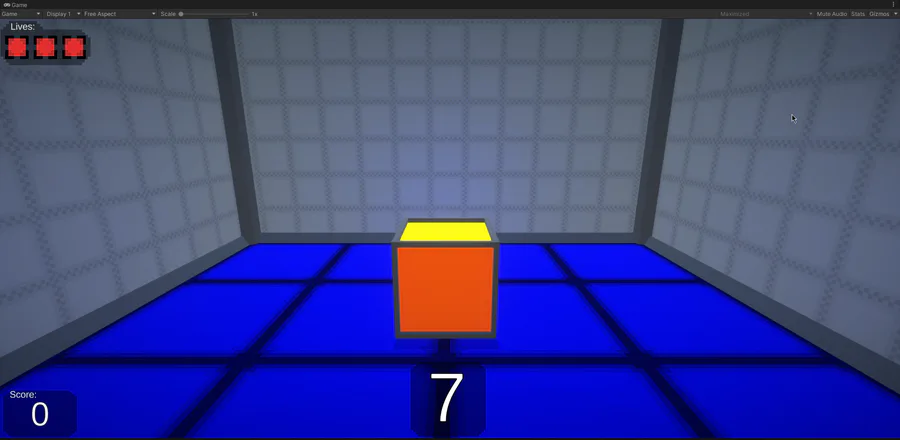
Many Improvements to the main menu, and I added a floor texture and improved the level behind the cube!

The Knightling launches on August 28! Wishlist it now so you don't miss out: https://bit.ly/KnightlingSteam

To celebrate the game's impending release, we've added The Knightling Pack and The Knightling Community Pack back to the Shop!

Okay, so I've gotten the functionality for the beetle shell render over the player working! (using the first 3 frames from the beetle shell collect animation as placeholder sprites, these ARE NOT the final sprites)